Every time I need a lemon I fall into the trap of buying a bag of them - partly because unwaxed lemons don't seem to be sold singly, and partly because each lemon works out cheaper.
However, if I don't use the lemons fairly quickly, it's a false economy, but that's not difficult to do as I love a lemon cake.
Dan Lepard calls this recipe a lemon drizzle cake, but whenever I make it the drizzle sets to a proper glacé icing. This doesn't bother me, as I don't like too much drizzle, but I don't feel happy calling it a drizzle cake, either.
This recipe really is delicious; there's the zest of 2 lemons and 75mls of juice to make it really lemony. Additionally, ground almonds keeps the cake moist and the addition of a little cornflour keeps the crumb really tender and delicate.
I don't deviate from the recipe in any way, but after adding up the weight of the ingredients, I bake it in a 2lb (900g) loaf tin, even though the recipe suggests a small tin should be used.
I'm still using the whole almonds, which were ground with the skins on (which explains the speckly appearance of the cake).
Showing posts with label Dan Lepard. Show all posts
Monday, 18 November 2019
Wednesday, 7 August 2019
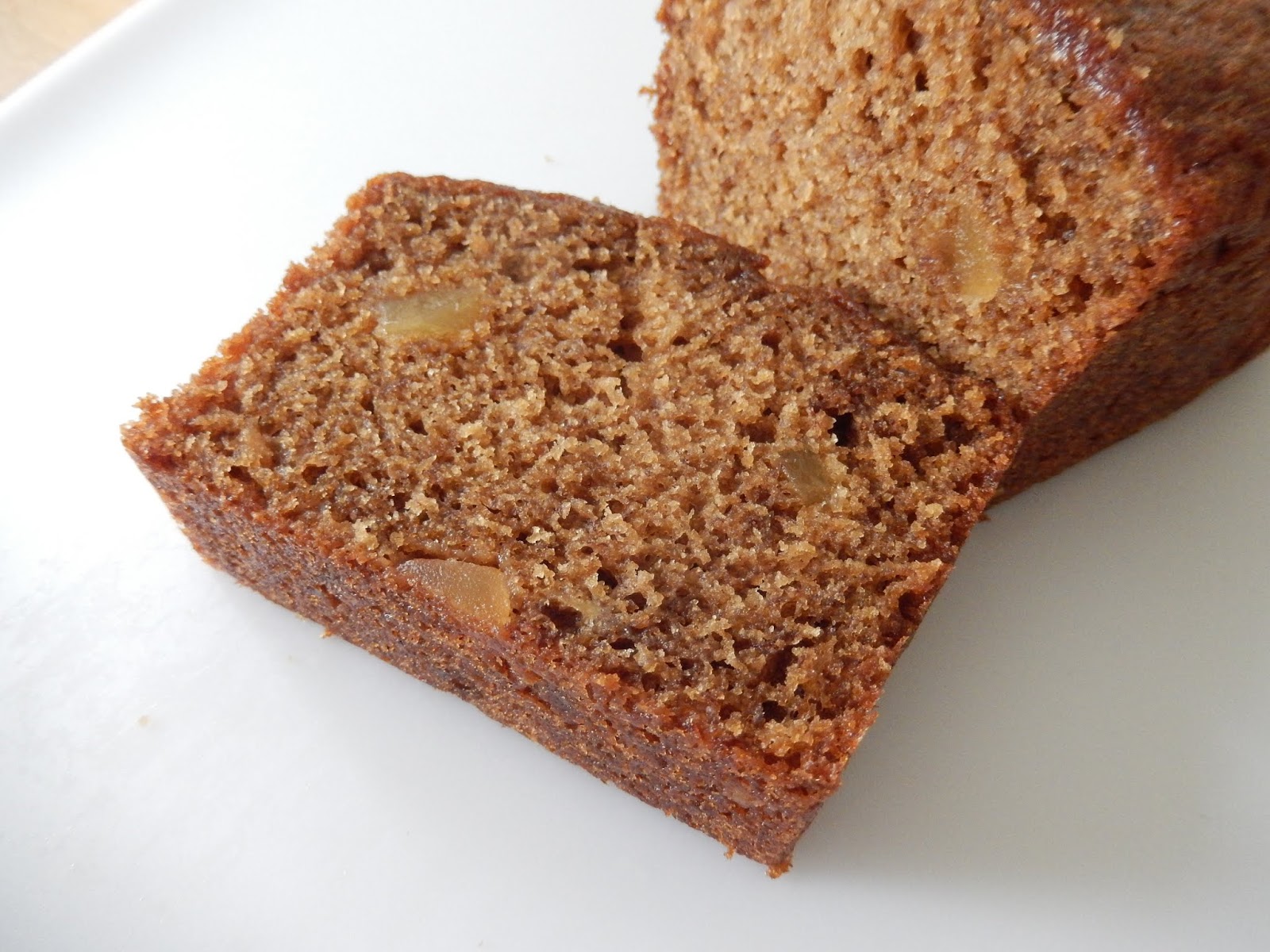
Dark Banana Ginger Cake
I feel as if I should apologise for three consecutive posts featuring loaves, but they are so practical now that I'm only baking for myself. Even with a small loaf cake, I often freeze part of it - mainly to save my waistline, not because I couldn't eat it all. Loaf shaped cakes are easy to portion and stack tidily in the freezer. In this case, I was able to bake this full-sized recipe (the second on the page) from the ever reliable Dan Lepard, but split it between two small loaf tins rather than bake it as one large 20cm (8") square cake. The cooking time for the smaller loaves was still 50 minutes.
I made a few changes to the recipe, some of which seemed inconsequential to how well the recipe worked - I used white bread flour, crystallised ginger instead of glacé, and added some ground spices to the recipe (1 teaspoon ginger and 1/2 teaspoon mixed spice). The final change was a bit more worrying - I only had two large bananas, which I was reasonably sure would weigh enough, but when the peel was off there was only 200g of flesh, not the 300g asked for in the recipe.
It was too late to back out at that stage so I went ahead, wondering if I needed to add anything to replace the missing 100g of banana. If the batter had been really thick, I might have added a tablespoon or two of natural yogurt, but it was very liquid, so I decided to go ahead with nothing else added. I noticed afterwards that Dan says in the introduction to the recipe that the bran in wholemeal flour soaks up the liquid from the mashed banana, so maybe losing the bran and using less banana cancelled each other out!
I really liked this cake, it was firm and close textured but not heavy, and it still smelled and tasted of banana. I think adding a little extra spice was a good idea as even though I was using fiery crystallised ginger pieces it was nice to have some spice flavour in the cake crumb too.
I made a few changes to the recipe, some of which seemed inconsequential to how well the recipe worked - I used white bread flour, crystallised ginger instead of glacé, and added some ground spices to the recipe (1 teaspoon ginger and 1/2 teaspoon mixed spice). The final change was a bit more worrying - I only had two large bananas, which I was reasonably sure would weigh enough, but when the peel was off there was only 200g of flesh, not the 300g asked for in the recipe.
It was too late to back out at that stage so I went ahead, wondering if I needed to add anything to replace the missing 100g of banana. If the batter had been really thick, I might have added a tablespoon or two of natural yogurt, but it was very liquid, so I decided to go ahead with nothing else added. I noticed afterwards that Dan says in the introduction to the recipe that the bran in wholemeal flour soaks up the liquid from the mashed banana, so maybe losing the bran and using less banana cancelled each other out!I really liked this cake, it was firm and close textured but not heavy, and it still smelled and tasted of banana. I think adding a little extra spice was a good idea as even though I was using fiery crystallised ginger pieces it was nice to have some spice flavour in the cake crumb too.
Labels:
banana,
cake,
crystallised ginger,
Dan Lepard,
spices,
strong bread flour
Friday, 10 August 2018
Tropicana Banana Cake
This banana cake with tropical flavours is another Dan Lepard recipe which I've used, and written about, before. As the years go by, the flavour of this cake varies according to whatever semi-dried exotic fruits I can get hold of - this year I used apricots, pineapple and mango - as fashion in dried fruit seems to change quite quickly. I bought dried mandarins, intending to add them too, but although I loved the taste, their texture didn't seem right for a cake.
As well as exotic fruit, the other flavours added to this cake are coconut and orange, and some ground almonds are used too, to keep the cake moist. The method for making the cake is a little tricky, and this is one time when it pays off to be well organised and have all the ingredients prepared and laid out in a logical arrangement before you start mixing.
As I've noted previously, the cake takes quite a bit longer to bake than suggested in the recipe - I added at least another 20 minutes before I was happy that the cake was fully cooked. The raw batter also almost fills a standard 2lb (900g) loaf tin, so if you've something slightly larger, it might be less worrisome to use that - I kept checking the oven, expecting to see the rising batter overflowing the tin.
Because I was taking this cake to a meeting of my local Cake Club (a replacement for the active branch of the Clandestine Cake Club, which now only exists on Facebook) I decided to pretty it up with a very light drizzle of orange glacé icing, made with icing sugar and some of the juice from the orange which provided the zest for the cake.
Everyone loved this cake - the blend of flavours worked really well with the dominant flavour being the coconut (although it wasn't overwhelming), the fruit was soft and chewy and the texture of the crumb was tender and moist.
There was one other banana loaf cake at the cake club - this one had added raspberries and chocolate chunks - along with several cakes based on lemon, a chocolate and vanilla marble cake, a custard slice and an apple and pecan cake. Now that the rules of the Clandestine Cake club don't apply, and we're not limited to large cakes, we hope to get more variety at future meetings, as pastries, biscuits and small cakes can be made - anything edible really!
As well as exotic fruit, the other flavours added to this cake are coconut and orange, and some ground almonds are used too, to keep the cake moist. The method for making the cake is a little tricky, and this is one time when it pays off to be well organised and have all the ingredients prepared and laid out in a logical arrangement before you start mixing.As I've noted previously, the cake takes quite a bit longer to bake than suggested in the recipe - I added at least another 20 minutes before I was happy that the cake was fully cooked. The raw batter also almost fills a standard 2lb (900g) loaf tin, so if you've something slightly larger, it might be less worrisome to use that - I kept checking the oven, expecting to see the rising batter overflowing the tin.
Because I was taking this cake to a meeting of my local Cake Club (a replacement for the active branch of the Clandestine Cake Club, which now only exists on Facebook) I decided to pretty it up with a very light drizzle of orange glacé icing, made with icing sugar and some of the juice from the orange which provided the zest for the cake.
Everyone loved this cake - the blend of flavours worked really well with the dominant flavour being the coconut (although it wasn't overwhelming), the fruit was soft and chewy and the texture of the crumb was tender and moist.
There was one other banana loaf cake at the cake club - this one had added raspberries and chocolate chunks - along with several cakes based on lemon, a chocolate and vanilla marble cake, a custard slice and an apple and pecan cake. Now that the rules of the Clandestine Cake club don't apply, and we're not limited to large cakes, we hope to get more variety at future meetings, as pastries, biscuits and small cakes can be made - anything edible really!
Labels:
almonds,
banana,
cake,
Clandestine Cake Club,
coconut,
Dan Lepard,
exotic dried fruit,
orange
Monday, 14 May 2018
Molasses and Coconut Rum Cake
I'm so glad I decided to bake this Molasses and Coconut Rum Cake, even though it was too big for me, and I had to freeze half of it in slices. It's the best cake I've tasted for a long time!
The recipe, from the ever reliable and inventive Dan Lepard, popped up on my Facebook feed recently, as I follow the Australian Good Food site. A lot of the recipes there aren't immediately relevant, as the seasons are reversed, but a lot of cake recipes, like this one, aren't seasonal anyway.
As is often the case with Dan, the recipe has a slightly unusual method - it wasn't difficult, but there were one or two points worth remembering for next time. The recipe says to heat the sugar and molasses (I used black treacle) together until any lumps of sugar have softened, but not to boil the mixture. The butter is then melted in the warm sugar. I don't think I heated the sugar enough, as when it was tipped into my mixing bowl a layer set on the bottom, which was really difficult to mix back in, and the butter, which I had cut into small cubes, only just melted. Better to have a little more heat, I think, then wait for the sugar and butter mixture to cool a little, if necessary, before going on to the next stage of adding the eggs, so that the excess heat doesn't cook the eggs.
I used a 900g (2lb) loaf tin, which made a more shallow cake than the one shown with the recipe, but a 450g (1lb) tin would have been too small, and we don't have an in-between size in the UK, as far as I'm aware.
I added about 3 tablespoons of rum to the cake - all there was left in the bottle - and it soaked in easily. I'd probably add a bit more next time, as the flavour wasn't as strong as I'd expected.
Because I was going to freeze part of the cake, I didn't make the frosting. I don't often add frostings to everyday cakes, but I think I'd add one if I made this for a special occasion - and the cake is certainly good enough for that!
There was a relatively large amount of desiccated coconut in this recipe, compared to traditional British coconut cake recipes, but it was almost overwhelmed by the stronger flavours of the black treacle and the spices. The texture of the cake was soft but not too sponge-like; in some ways it was more like a gingerbread than a coconut cake, although it didn't get a sticky top when stored.
This is definitely a recipe to repeat!
The recipe, from the ever reliable and inventive Dan Lepard, popped up on my Facebook feed recently, as I follow the Australian Good Food site. A lot of the recipes there aren't immediately relevant, as the seasons are reversed, but a lot of cake recipes, like this one, aren't seasonal anyway.As is often the case with Dan, the recipe has a slightly unusual method - it wasn't difficult, but there were one or two points worth remembering for next time. The recipe says to heat the sugar and molasses (I used black treacle) together until any lumps of sugar have softened, but not to boil the mixture. The butter is then melted in the warm sugar. I don't think I heated the sugar enough, as when it was tipped into my mixing bowl a layer set on the bottom, which was really difficult to mix back in, and the butter, which I had cut into small cubes, only just melted. Better to have a little more heat, I think, then wait for the sugar and butter mixture to cool a little, if necessary, before going on to the next stage of adding the eggs, so that the excess heat doesn't cook the eggs.
I used a 900g (2lb) loaf tin, which made a more shallow cake than the one shown with the recipe, but a 450g (1lb) tin would have been too small, and we don't have an in-between size in the UK, as far as I'm aware.
I added about 3 tablespoons of rum to the cake - all there was left in the bottle - and it soaked in easily. I'd probably add a bit more next time, as the flavour wasn't as strong as I'd expected.
Because I was going to freeze part of the cake, I didn't make the frosting. I don't often add frostings to everyday cakes, but I think I'd add one if I made this for a special occasion - and the cake is certainly good enough for that!
There was a relatively large amount of desiccated coconut in this recipe, compared to traditional British coconut cake recipes, but it was almost overwhelmed by the stronger flavours of the black treacle and the spices. The texture of the cake was soft but not too sponge-like; in some ways it was more like a gingerbread than a coconut cake, although it didn't get a sticky top when stored.This is definitely a recipe to repeat!
Labels:
cake,
cinnamon,
coconut,
coconut milk,
Dan Lepard,
ginger,
rum,
strong bread flour
Wednesday, 14 March 2018
Plum and Cinnamon Loaf
This cake was going to be a half-sized attempt at Dan Lepard's tried and tested Stone Fruit Yogurt Cake, until I realised that I was lacking the necessary semolina. Not one to be easily thwarted, I used polenta instead and carried on!
I wouldn't usually buy fresh plums at this time of year, as they have been trekked halfway round the world, but the checkout till at Waitrose kindly printed out a coupon for a pack of 6 'Perfectly Ripe' plums at half price. This recipe used three plums - they were quite large, weighing about 80g each, I seem to remember.
One of my baking books tells me that a 20cm round deep cake tin is equivalent to a 900g (2lb) loaf tin, so I hoped that half the quantities in Dan's recipe would be OK in a 450g(1lb) loaf tin. It was a near thing - the batter filled more of the tin than I was happy with, but fortunately the cake didn't rise too much. I made a couple of slight alterations to the recipe, but nothing that altered it substantially from the original.
Ingredients
90g caster sugar + 2 teaspoons extra
90g softened butter +15g extra
3 large ripe plums
1 large egg
1 teaspoon vanilla extract
80g full-fat Greek-style natural yogurt
40g polenta
85g plain flour
1/2 teaspoon cinnamon (optional)
1 teaspoon baking powder
Method
Line a 450g loaf tin with foil, pressing it well into the corners without tearing it, and grease with a little of the extra butter. Dot the remainder of the extra butter over the base, and sprinkle over 1 teaspoon of caster sugar.
Preheat the oven to 180C.
Halve and de-stone the plums, and cut each half into 4 slices. Arrange about 2/3 of the plum slices in the base of the loaf tin, and sprinkle over another teaspoon of sugar. Chop the remaining slices of fruit into small pieces.
Mix the flour, polenta, cinnamon and baking powder together in a small bowl.
Cream the butter and sugar together until light and fluffy, then beat in the egg and vanilla extract, adding a spoonful of the flour mix to prevent curdling.
With the mixer on it's slowest speed, stir in the yogurt, followed by the rest of the flour mix.
Fold in the remaining chopped plums with a spoon, then transfer the batter to the baking tin.
Bake for about 60 minutes, covering for the last 15-20 minutes if the cake seems to be browning too quickly. A test probe should come out clean of cake batter, although you might hit a piece of fruit which will make the probe look damp.
Leave for 10 minutes, then turn out onto a plate and carefully peel away the foil. If any of the fruit topping becomes dislodged, it can be gently put back into place. Cool before serving.
The slices of plums on top of the loaf were a really pretty pink colour - it was lovely to photograph something which wasn't brown! There was just enough cinnamon to taste, without it overwhelming the plums, which were both sweet and sharp and gave the cake a fresh taste which I've been missing all winter!
Incidentally, I was pleasantly surprised at how tasty the plums were, but I think I still prefer to buy fruit as locally and seasonally as possible.
I wouldn't usually buy fresh plums at this time of year, as they have been trekked halfway round the world, but the checkout till at Waitrose kindly printed out a coupon for a pack of 6 'Perfectly Ripe' plums at half price. This recipe used three plums - they were quite large, weighing about 80g each, I seem to remember.
One of my baking books tells me that a 20cm round deep cake tin is equivalent to a 900g (2lb) loaf tin, so I hoped that half the quantities in Dan's recipe would be OK in a 450g(1lb) loaf tin. It was a near thing - the batter filled more of the tin than I was happy with, but fortunately the cake didn't rise too much. I made a couple of slight alterations to the recipe, but nothing that altered it substantially from the original.
Ingredients
90g caster sugar + 2 teaspoons extra
90g softened butter +15g extra
3 large ripe plums
1 large egg
1 teaspoon vanilla extract
80g full-fat Greek-style natural yogurt
40g polenta
85g plain flour
1/2 teaspoon cinnamon (optional)
1 teaspoon baking powder
Method
Line a 450g loaf tin with foil, pressing it well into the corners without tearing it, and grease with a little of the extra butter. Dot the remainder of the extra butter over the base, and sprinkle over 1 teaspoon of caster sugar.
Preheat the oven to 180C.
Halve and de-stone the plums, and cut each half into 4 slices. Arrange about 2/3 of the plum slices in the base of the loaf tin, and sprinkle over another teaspoon of sugar. Chop the remaining slices of fruit into small pieces.
Mix the flour, polenta, cinnamon and baking powder together in a small bowl.
Cream the butter and sugar together until light and fluffy, then beat in the egg and vanilla extract, adding a spoonful of the flour mix to prevent curdling.
With the mixer on it's slowest speed, stir in the yogurt, followed by the rest of the flour mix.
Fold in the remaining chopped plums with a spoon, then transfer the batter to the baking tin.
Bake for about 60 minutes, covering for the last 15-20 minutes if the cake seems to be browning too quickly. A test probe should come out clean of cake batter, although you might hit a piece of fruit which will make the probe look damp.Leave for 10 minutes, then turn out onto a plate and carefully peel away the foil. If any of the fruit topping becomes dislodged, it can be gently put back into place. Cool before serving.
The slices of plums on top of the loaf were a really pretty pink colour - it was lovely to photograph something which wasn't brown! There was just enough cinnamon to taste, without it overwhelming the plums, which were both sweet and sharp and gave the cake a fresh taste which I've been missing all winter!
Incidentally, I was pleasantly surprised at how tasty the plums were, but I think I still prefer to buy fruit as locally and seasonally as possible.
Monday, 13 March 2017
Date and Ginger Chocolate Chip Biscuits
I think it must be the (sometimes unusual) combinations of flavours that Dan uses, and that he tries to maximise the impact of those flavours, which makes his recipes so appealing to me. In this case, I love the combination of dates with chocolate, and ginger with chocolate, as well as dates and ginger, but the only time I've ever used the three ingredients together is in another Dan Lepard recipe - Chocolate Passion Cake, where the dates were used as an egg replacement rather than a flavouring ingredient.
These Date and Ginger Chocolate Chip Biscuits, published on the Good Food, Australia site, were relatively quick and easy to make, as the method is based on melting butter and sugar together, before mixing in the other ingredients. I used cocoa, rather than carob, and dark muscovado sugar but otherwise followed the recipe exactly.
I portioned out the biscuit dough using scales, and got 21 biscuits out of the mix, not the 24 suggested in the recipe. As I was using the fan oven, so that I could put in two trays of biscuits together, I cooked for the minimum time suggested.These biscuits were as delicious as I expected. Rich in chocolate flavour, with large chunks of fiery ginger which were a delight to chew on. I find dates quite neutral in flavour (which is why they're often used as a sugar replacement these days) but I think that they really enhance the impact of chocolate and they certainly contributed to the chewiness of these biscuits.
![]() |
| This shows how the chocolate melted and tried to escape! |

I'm sending these to Choclette's We Should Cocoa link-up for March, over at Tin and Thyme. There is no theme to the link-up, any recipe, using any form of chocolate, is welcome.
Wednesday, 25 January 2017
Chestnut Ginger Biscuits
How often do I complain that there isn't enough ginger in a recipe? It's probably more than 50% of the time, with recipes where ginger is supposed to be the main flavor. No such problem with this biscuit recipe from Dan Lepard, which used six teaspoons of ground ginger - the flavour was so fierce there was an afterburn (in a very good way!).I had no problems with following the recipe; the only change I made was to use all treacle instead of part golden syrup. This was suggested as an alternative, to increase the liquorice-ness of the treacle flavour. I chilled the soft dough for about 3 hours before forming it into balls - which I did using scales to ensure uniformity. If my memory is correct, I got 25 biscuits out of the dough, and after baking they stayed soft like cookies rather than being crisp like gingernuts. I'd been expecting them to be crisp, so this was a surprise, but not really a disappointment.
There wasn't much to complain about with these delicious biscuits, although my husband suggested they would be better without being rolled in sugar. Once again, I felt that the chestnut flour was overwhelmed by the other flavours in the recipe; treacle, ginger and ground cloves all have unique and striking flavours. After my past experiences it wasn't a surprise that I couldn't distinguish the flavour of the chestnut flour, but I had just a little left to use up so thought the recipe worth trying. (I'm really talking myself into not buying chestnut flour again, unless someone can recommend a recipe where it can be tasted!)
PS - the second attempt at the Spelt, Lemon and Maple Drizzle Cake wasn't any better than the first. I managed to find white spelt flour and added half a teaspoon of bicarbonate of soda to the batter, but the cake still sank, this time even before the cooking time was up. Two attempts is enough - there are plenty of other cake recipes out there!
Labels:
biscuits and bars,
chestnut flour,
Dan Lepard,
ginger,
ground cloves
Thursday, 14 July 2016
Chocolate Cake with White Chocolate and Mascarpone Buttercream
My son and I both have July birthdays, and we are both chocoholics, which makes decisions on birthday cakes very easy. What's not so easy is finding something new and 'special' to make each year. I was in the process of looking for this year's cake when this recipe from Dan Lepard popped up on my Facebook page. I still miss Dan's weekly column in the Guardian newspaper, so the fact that he has new recipes appearing occasionally on Australian Good Food is very exciting for me. Even though I'm not a big fan of white chocolate (neither eating it nor using it), this cake seemed just what I was looking for, so I was prepared to try white chocolate once more.
My first problem, after reading the recipe, was finding solid-based deep sponge tins. After finding only one brand in my local cookware shop, at £10 a tin, I went for a cheap supermarket brand. I bought 3 tins for less than £10 - my thinking, which proved correct, was that they weren't very deep, so I would probably need to make three layers, rather than two. Incidentally, another surprise, while shopping, was to notice that silicone bakeware has almost disappeared from the marketplace. I've never been a big fan of silicone for large cakes as the early examples were too flexible, and bulged in the wrong places, but I thought those problems had been overcome. I didn't realise the trend had passed altogether!
The second problem was that the three cakes didn't rise very evenly, probably due to uneven heating. Although I was using the fan oven to cook all three cakes at the same time, two of the cakes were on the same shelf and quite near to the walls of the oven. These irregularities were overcome, when assembling the cake, by slicing an off-centre bulge off one cake, carefully positioning the bottom two cakes so that the overall effect was level, and choosing the best cake for the top layer.
Apart from that everything went smoothly, even though it was quite an unconventional recipe. I decided to use sunflower oil rather than olive oil, but that was the only change I made to the ingredients. Once the cake batter was made and divided between three tins, using scales for accuracy, they only needed 25 minutes in the oven.
I was really careful when melting the white chocolate for the buttercream, as I've always had problems in the past. I used Green and Black's White Cooking Chocolate, as it had the highest levels of cocoa solids of all the brands I could find. I put the bowl of chocolate over a pan of just boiled water and removed it when the chocolate was about 2/3 melted, so that it didn't overheat. I was also careful not to overbeat the mixture when adding the mascarpone and white chocolate to the basic buttercream, as mentioned in the recipe. The recipe made more than enough buttercream to fill and top the three cakes - I still had leftovers, even with the additional layer! Just to finish off, I topped the cake with a dusting of grated 100% cacao
I was very pleased with this cake; the cake layers were dark, rich, tender and very moist - everything you want in a special occasion chocolate cake! The buttercream didn't seem as sweet as I expected, possibly because of the addition of the mascarpone, and complimented the bitter notes of the cake very well. Green and Black's White Cooking Chocolate contains quite a lot of vanilla, and this additional flavour worked well in the buttercream too.
I'm sending this cake to July's We Should Cocoa event, hosted by Choclette at Tin and Thyme. Choclette also has a July birthday, as do many of her friends and family, so wants participants in this long-running event to just celebrate July with chocolate! Anything goes, as far as a theme is concerned, as long as it's celebratory, so my birthday cake should fit in well!
My first problem, after reading the recipe, was finding solid-based deep sponge tins. After finding only one brand in my local cookware shop, at £10 a tin, I went for a cheap supermarket brand. I bought 3 tins for less than £10 - my thinking, which proved correct, was that they weren't very deep, so I would probably need to make three layers, rather than two. Incidentally, another surprise, while shopping, was to notice that silicone bakeware has almost disappeared from the marketplace. I've never been a big fan of silicone for large cakes as the early examples were too flexible, and bulged in the wrong places, but I thought those problems had been overcome. I didn't realise the trend had passed altogether!
The second problem was that the three cakes didn't rise very evenly, probably due to uneven heating. Although I was using the fan oven to cook all three cakes at the same time, two of the cakes were on the same shelf and quite near to the walls of the oven. These irregularities were overcome, when assembling the cake, by slicing an off-centre bulge off one cake, carefully positioning the bottom two cakes so that the overall effect was level, and choosing the best cake for the top layer.
Apart from that everything went smoothly, even though it was quite an unconventional recipe. I decided to use sunflower oil rather than olive oil, but that was the only change I made to the ingredients. Once the cake batter was made and divided between three tins, using scales for accuracy, they only needed 25 minutes in the oven.
I was really careful when melting the white chocolate for the buttercream, as I've always had problems in the past. I used Green and Black's White Cooking Chocolate, as it had the highest levels of cocoa solids of all the brands I could find. I put the bowl of chocolate over a pan of just boiled water and removed it when the chocolate was about 2/3 melted, so that it didn't overheat. I was also careful not to overbeat the mixture when adding the mascarpone and white chocolate to the basic buttercream, as mentioned in the recipe. The recipe made more than enough buttercream to fill and top the three cakes - I still had leftovers, even with the additional layer! Just to finish off, I topped the cake with a dusting of grated 100% cacao
I was very pleased with this cake; the cake layers were dark, rich, tender and very moist - everything you want in a special occasion chocolate cake! The buttercream didn't seem as sweet as I expected, possibly because of the addition of the mascarpone, and complimented the bitter notes of the cake very well. Green and Black's White Cooking Chocolate contains quite a lot of vanilla, and this additional flavour worked well in the buttercream too.I'm sending this cake to July's We Should Cocoa event, hosted by Choclette at Tin and Thyme. Choclette also has a July birthday, as do many of her friends and family, so wants participants in this long-running event to just celebrate July with chocolate! Anything goes, as far as a theme is concerned, as long as it's celebratory, so my birthday cake should fit in well!
Labels:
100% cacao,
buttercream,
cake,
chocolate,
Dan Lepard,
mascarpone,
We Should Cocoa,
white chocolate
Wednesday, 25 March 2015
Tropicana Banana Cake
- revisited for Formula 1 Foods
Although blogging about my baking has made me more adventurous, one of my frequent regrets is that I don't get a chance to remake things that I really liked first time around. It's one of the penalties of always looking for something new; although I often make flavour adaptions of good recipes, so that they are a little bit different the second time around, some recipes inevitably fall by the wayside. This was true of this Dan Lepard recipe, which he calls Tropicana Banana Cake (for the totally tropical taste, I guess!). I made the cake back when the recipe was originally published in 2009, noted my dislike of the very sugary tropical fruit mixture I'd chosen, and then almost forgot about it.
I say almost, because when Caroline of Caroline Makes started her Formula 1 Foods challenge at the beginning of the month, this was the first thing I thought of for the Malaysia leg of the journey around the world. The idea behind the challenge is that we make something inspired by the country where the current Formula 1 Grand Prix race is taking place. Caroline often bakes while her partner watches the GP, as it doesn't interest her, and thought there might be others in the same situation. I do actually watch the races, although they are not as interesting as they used to be (and a snooze on a Sunday afternoon, in front of the TV, is no bad thing if the race gets too boring), but thought the challenge sounded fun.
I looked at recipes for traditional baked sweet treats originating in Malaysia, but didn't think any of them were quite within my capabilities or budget. Pineapple tarts looked delicious but most recipes used 3 or 4 pineapples cooked down with sugar to a solid mass, which was then formed into balls and put into pastry cases. However, what all the recipes had in common was their use of the tropical fruits of the area, which brings us back to the Tropicana Banana Cake. This contains banana(!), coconut, pineapple, mango, papaya and orange - what could be more evocative of the tropical far East?
This time I managed to find soft dried mango and pineapple which had been dried without adding any sugar, but the papaya had been processed with a lot of extra sugar, so I only used a small amount of that. The 175g of dried fruit needed was made up of 70g each of mango and pineapple and 35g of papaya. I followed the recipe exactly - it's a slightly unusual method but it does give the good results promised by Dan Lepard.
The cake was as good as I remembered - a subtle blending of all the added flavours, with coconut as the predominant flavour, and a light, but moist, tender crumb. The added bonus, for me this time, was that the fruit stayed evenly distributed throughout the cake - last time the sugar heavy fruit pieces sank dramatically.
I say almost, because when Caroline of Caroline Makes started her Formula 1 Foods challenge at the beginning of the month, this was the first thing I thought of for the Malaysia leg of the journey around the world. The idea behind the challenge is that we make something inspired by the country where the current Formula 1 Grand Prix race is taking place. Caroline often bakes while her partner watches the GP, as it doesn't interest her, and thought there might be others in the same situation. I do actually watch the races, although they are not as interesting as they used to be (and a snooze on a Sunday afternoon, in front of the TV, is no bad thing if the race gets too boring), but thought the challenge sounded fun.
The cake was as good as I remembered - a subtle blending of all the added flavours, with coconut as the predominant flavour, and a light, but moist, tender crumb. The added bonus, for me this time, was that the fruit stayed evenly distributed throughout the cake - last time the sugar heavy fruit pieces sank dramatically.
Labels:
almonds,
banana,
cake,
coconut,
Dan Lepard,
exotic dried fruit,
Formula 1 Foods,
orange
Saturday, 7 March 2015
Semolina Cookies
One Batch of Dough, Two Delicious Cookies
The same basic dough is used for these Date Bars and Pistachio Cookies. It's a Dan Lepard recipe, given Middle Eastern flavours with pomegranate molasses, rose water and orange blossom water. I made one batch of dough from this recipe, and made a half quantity of the Date Bars and half a batch of these Pistachio Cookies.
I had decided to use semolina for this month's AlphaBakes Challenge (Ros of The More Than Occasional Baker has chosen the letter S), and was trying to decide between a cake or biscuits when Janie of The Hedge Combers announced that the March Tea Time Treats challenge was for cookies and biscuits. The decision was made for me - I would make semolina cookies which could be an entry for both baking challenges.

Semolina seems to be common in Middle Eastern and Asian cooking, but is less well known in the UK as a baking ingredient. It's sometimes added to shortbread to make it crisper and crumblier, but is best known as the basis for the sort of milk pudding that we all hated at school! Semolina is the coarse centres of durum wheat grains, left after the flour has been milled away.
I looked at many recipes for semolina cookies, which all looked similar, but they had small differences in the proportions of fat, flour and eggs, so that it was impossible to decide if one recipe was going to work out better than another. In the end I found Dan's recipe and was persuaded by the extra flavours added to the cookie dough. After trying it, I'm sure the dough on it's own would have made delicious cookies.
In the first recipe the dough is rolled out and wrapped around a filling of spiced date purée and in the second, chopped pistachios and a little more sugar is added, and then the dough is just rolled into balls. Both recipes were fairly straightforward - just a little fiddly - and gave good results. One tip I can pass on - if you are going to purée dried dates in a food processor, cut each one in half across the length, to check that the stones have been removed. I found two left in in my pack of dates. Trying to process a date stone could be a costly blunder!
The dough was a little dryer than I expected, and I eventually realised (after it was too late to put things right) that I hadn't added quite enough liquid, as I had used less of the rose water and orange flower water (mine are quite concentrated and I've been caught out in the past by following recipe instructions and finding out I'd used too much) but hadn't made up for the lower volume of liquid.
The dry dough was difficult to roll out and meant that the dough round the Date Bars cracked a little during baking. It was also difficult to incorporate all the chopped nuts for the Pistachio Cookies, but I'm not sure if that was due to the dryness, which made the dough crumbly, or the sheer volume of nuts - probably a bit of both. At least I know how to remedy the problem - a couple of tablespoons of milk or water is all that is needed next time.
Additionally, next time I will flatten the Date Bars a little before cooking. This wasn't mentioned in the instructions, so I expected that they would flatten naturally during cooking to turn out as in the photograph accompanying the recipe (see the link above). As you can see from the photographs of my Date Bars, this didn't happen!
Both these cookies were delicious, in different ways. The Date Bars were the best - the moist spicy date filling and the crunchy sesame seed coating were a good contrast to the crumbly cookie dough.
However, with the Pistachio Cookies the added flavours in the dough shone through, particularly the rose water, as the pistachio nuts did not have a strong flavour.
AlphaBakes (rules here) is hosted alternately by Ros, of The More Than Occasional Baker and Caroline of Caroline Makes.
Tea Time Treats (rules here) is hosted alternately by Janie of The Hedge Combers and Karen of Lavender and Lovage.
The same basic dough is used for these Date Bars and Pistachio Cookies. It's a Dan Lepard recipe, given Middle Eastern flavours with pomegranate molasses, rose water and orange blossom water. I made one batch of dough from this recipe, and made a half quantity of the Date Bars and half a batch of these Pistachio Cookies.
I had decided to use semolina for this month's AlphaBakes Challenge (Ros of The More Than Occasional Baker has chosen the letter S), and was trying to decide between a cake or biscuits when Janie of The Hedge Combers announced that the March Tea Time Treats challenge was for cookies and biscuits. The decision was made for me - I would make semolina cookies which could be an entry for both baking challenges.
Semolina seems to be common in Middle Eastern and Asian cooking, but is less well known in the UK as a baking ingredient. It's sometimes added to shortbread to make it crisper and crumblier, but is best known as the basis for the sort of milk pudding that we all hated at school! Semolina is the coarse centres of durum wheat grains, left after the flour has been milled away.
I looked at many recipes for semolina cookies, which all looked similar, but they had small differences in the proportions of fat, flour and eggs, so that it was impossible to decide if one recipe was going to work out better than another. In the end I found Dan's recipe and was persuaded by the extra flavours added to the cookie dough. After trying it, I'm sure the dough on it's own would have made delicious cookies.
The dry dough was difficult to roll out and meant that the dough round the Date Bars cracked a little during baking. It was also difficult to incorporate all the chopped nuts for the Pistachio Cookies, but I'm not sure if that was due to the dryness, which made the dough crumbly, or the sheer volume of nuts - probably a bit of both. At least I know how to remedy the problem - a couple of tablespoons of milk or water is all that is needed next time.
Both these cookies were delicious, in different ways. The Date Bars were the best - the moist spicy date filling and the crunchy sesame seed coating were a good contrast to the crumbly cookie dough.
However, with the Pistachio Cookies the added flavours in the dough shone through, particularly the rose water, as the pistachio nuts did not have a strong flavour. AlphaBakes (rules here) is hosted alternately by Ros, of The More Than Occasional Baker and Caroline of Caroline Makes.
Tea Time Treats (rules here) is hosted alternately by Janie of The Hedge Combers and Karen of Lavender and Lovage.Wednesday, 16 July 2014
Another Chocolate Cake
My son's birthday follows hot on the heels of my own this month, but I know what he likes without needing to ask - chocolate! However, apart from celebrating his birthday, this cake was baked as a test of the beautiful, but huge, cake pan I found in T K Maxx. You can imagine my relief when, with the aid of cake release spray, the cake slipped neatly out of the pan, with not a single crumb left behind. It's a shape that's impossible to line, and although I've used butter and flour to coat bundt tins, that can sometimes leave a visible residue behind.
I had worked out, with the aid of smaller cake pans and measuring jugs, that I needed roughly 1.5 times a recipe designed for an 8" square tin. I already had this Dan Lepard cake recipe in mind, as it rises evenly and gives the moist, rich, solid (but still quite light) kind of chocolate cake you want for special occasions, and fortunately it was simple to make it half as big again - no halved eggs for instance! It was perhaps a tiny fraction too much batter, but didn't overflow and still rose evenly, and more importantly, still looked in proportion when cut.
Once I'd got a perfect cake, it seemed a shame to lose all the definition by slathering a frosting or glaze on top, so I contented myself with blobs of chocolate frosting on each segment to hold a mini-Oreo cookie or sweetie. The rest of the chocolate frosting was used as a hot fudge sauce to accompany the cake, and a topping for a coffee and chocolate semifreddo, made for the same birthday dinner.
The cake makes 16 huge portions, which meant, after we each had a piece for dinner, both son and daughter could take a decent sized portion home with them.
Once I'd got a perfect cake, it seemed a shame to lose all the definition by slathering a frosting or glaze on top, so I contented myself with blobs of chocolate frosting on each segment to hold a mini-Oreo cookie or sweetie. The rest of the chocolate frosting was used as a hot fudge sauce to accompany the cake, and a topping for a coffee and chocolate semifreddo, made for the same birthday dinner.
The cake makes 16 huge portions, which meant, after we each had a piece for dinner, both son and daughter could take a decent sized portion home with them.
Thursday, 19 June 2014
Speculaas - Dutch spiced cookies
When I was offered a sample of speculaas spice mix, from Steven Dotsch, director of The Speculaas Spice Company, I jumped at the chance to try it, as speculaas have been on my 'to do' baking list for ages. These spiced Dutch cookies are closely associated with Christmas baking, but that didn't stop me trying out the spice straight away. The Speculaas Spice Company has only recently launched it's spice mix on the market, and Steven was inspired to start the company because he missed the homemade biscuits from his childhood in Amsterdam. You can read Steven's story, and get hold of his spice mix, from the company's website.
The spice mix he eventually brought to the market is based on his grandmother's recipe and contains a blend of nine spices including high grade cinnamon, cloves and ginger. The other six are being kept a secret, but we can have a good guess at what they might be from the spice mix recipe that Dan Lepard publishes alongside the recipe I used for Speculaas cookies. Dan's spice mix comes from a Dutch friend, and I guess most Dutch bakers would have their own special blend of spices. Whatever the other spices are in the Vandotsch mix, besides the cinnamon, cloves and ginger, they come together in a very subtle way to produce something that is almost indescribably unique. From the smell, I can recognise the cloves, but the flavour isn't really like any of the main constituents - it's almost as if a new spice has been found!
I chose Dan's recipe, not just because I respect his skills as a baker, but because I'm lazy. Nearly all the recipes I found rolled out the cookie dough and cut it to shape, or pressed the dough into special moulds. As I'm not a Dutch housewife, I don't have any moulds, and rolling and cutting didn't appeal to me. Dan's recipe chilled the dough in a rectangular mould, then cut thin slices from the block of dough, a method I've used before for some similar biscuits - caramel almond thins. This method does produce more rustic looking cookies, but that's not something that bothers me.
This recipe is unusual in another respect - it adds finely crushed cream cracker crumbs to the dough to increase the density and crispness. I followed the recipe exactly, and chilled the dough overnight, as that was most convenient for me. I guess the dough would need chilling for at least three hours if you wanted to make the recipe in one day! When it came to slicing the dough I got over 30 cookies from half the block, so froze the other half for future use. The cookies spread a little during baking, so mustn't be placed too close together.
As I can't describe the flavour of the spice mix, all I can say is that these biscuits were delicious. They were very crisp (something I didn't achieve with the caramel almond thins) and the spices gave the measure of lasting heat, in the mouth, that you'd expect from the use of cinnamon and ginger. The only thing I disliked was the pale specks of cracker crumbs showing in the cookies, but that is easily remedied by finer crushing next time!
Disclaimer - although I was sent a 15g sample of Vandotsch speculaas spice mix, I was not asked to give a positive review. Any opinion expressed is my own!
The spice mix he eventually brought to the market is based on his grandmother's recipe and contains a blend of nine spices including high grade cinnamon, cloves and ginger. The other six are being kept a secret, but we can have a good guess at what they might be from the spice mix recipe that Dan Lepard publishes alongside the recipe I used for Speculaas cookies. Dan's spice mix comes from a Dutch friend, and I guess most Dutch bakers would have their own special blend of spices. Whatever the other spices are in the Vandotsch mix, besides the cinnamon, cloves and ginger, they come together in a very subtle way to produce something that is almost indescribably unique. From the smell, I can recognise the cloves, but the flavour isn't really like any of the main constituents - it's almost as if a new spice has been found!
This recipe is unusual in another respect - it adds finely crushed cream cracker crumbs to the dough to increase the density and crispness. I followed the recipe exactly, and chilled the dough overnight, as that was most convenient for me. I guess the dough would need chilling for at least three hours if you wanted to make the recipe in one day! When it came to slicing the dough I got over 30 cookies from half the block, so froze the other half for future use. The cookies spread a little during baking, so mustn't be placed too close together.
Disclaimer - although I was sent a 15g sample of Vandotsch speculaas spice mix, I was not asked to give a positive review. Any opinion expressed is my own!
Labels:
almonds,
biscuits and bars,
Dan Lepard,
product review,
spices
Tuesday, 12 November 2013
Blueberry Almond Bars
These tasty fruit-topped bars, made using this recipe from Dan Lepard, are a good way of stretching a little fruit to feed several people.
The recipe, although simple enough to follow, is quite time consuming and uses a lot of equipment - a saucepan for each of the two upper layers plus a bowl for the base, as well as mixing and weighing utensils.
The results were delicious, but rather fragile. The base was quite crumbly and the almond topping stayed soft and sticky. Although this gave some lovely contrasts of texture, it made the bars difficult to cut and handle, and they needed eating with a fork.
The almond layer was very sweet and tasted of caramel, but this sweetness was offset by the tartness of the fruit and the plainness of the bottom layer, which was a cross between a shortbread and a cake.
The recipe, although simple enough to follow, is quite time consuming and uses a lot of equipment - a saucepan for each of the two upper layers plus a bowl for the base, as well as mixing and weighing utensils.
The results were delicious, but rather fragile. The base was quite crumbly and the almond topping stayed soft and sticky. Although this gave some lovely contrasts of texture, it made the bars difficult to cut and handle, and they needed eating with a fork.
Sunday, 21 July 2013
Apricot Ginger Yogurt Cake
There's an obvious dilemma (dilemna?) when baking during hotter than usual weather at this time of year. The abundance of wonderful fresh fruit cries out to be used, but we know things won't keep well unless refrigerated, which often spoils the texture of cakes and pastries, even if they are brought back to room temperature before serving.
I decided to take my chances with this fresh apricot cake, to my cost. It was baked on Thursday afternoon, but was mouldy by Saturday evening - I had hoped it would last long enough, without refrigeration, to be finished as Saturday's dessert, but the last three portions had to be thrown away.
The recipe I used was the delightfully versatile Stone Fruit Yogurt Cake from Dan Lepard. I used about 450g fresh apricots - 175g chopped into the cake batter and the rest arranged carefully in the base of the cake tin before putting in the cake batter. I also reduced the lemon zest to that from one lemon and added 50g of chopped glacé ginger and a teaspoon of ground ginger to the cake batter to add a little zing, as fresh apricots are often a bit of a gamble in the flavour stakes. As it turned out these apricots were wonderfully tart with a good depth of flavour when cooked, but the ginger still added an extra dimension to the overall balance of the cake.
The texture of this cake is quite dense and moist, thanks to the semolina in the batter, which makes it a great dessert as well as a tasty cake. It would be good as a picnic dessert if left in the tin until ready to eat.
This month's Tea Time Treats challenge, hosted by Karen at Lavender and Lovage, is to use fresh fruit when creating something suitable for the tea-table, so I am submitting this cake. Karen shares hosting duties for this Tea Time Treats (full rules here) with Kate at What Kate Baked. This month Karen is using a linky for submission of entries but will still write a round-up post at the end of the month.
I decided to take my chances with this fresh apricot cake, to my cost. It was baked on Thursday afternoon, but was mouldy by Saturday evening - I had hoped it would last long enough, without refrigeration, to be finished as Saturday's dessert, but the last three portions had to be thrown away.
The recipe I used was the delightfully versatile Stone Fruit Yogurt Cake from Dan Lepard. I used about 450g fresh apricots - 175g chopped into the cake batter and the rest arranged carefully in the base of the cake tin before putting in the cake batter. I also reduced the lemon zest to that from one lemon and added 50g of chopped glacé ginger and a teaspoon of ground ginger to the cake batter to add a little zing, as fresh apricots are often a bit of a gamble in the flavour stakes. As it turned out these apricots were wonderfully tart with a good depth of flavour when cooked, but the ginger still added an extra dimension to the overall balance of the cake.
The texture of this cake is quite dense and moist, thanks to the semolina in the batter, which makes it a great dessert as well as a tasty cake. It would be good as a picnic dessert if left in the tin until ready to eat.
This month's Tea Time Treats challenge, hosted by Karen at Lavender and Lovage, is to use fresh fruit when creating something suitable for the tea-table, so I am submitting this cake. Karen shares hosting duties for this Tea Time Treats (full rules here) with Kate at What Kate Baked. This month Karen is using a linky for submission of entries but will still write a round-up post at the end of the month.
Labels:
apricots,
cake,
Dan Lepard,
dessert,
ginger,
Tea Time Treat,
yogurt
Subscribe to:
Comments (Atom)