Showing posts with label nutmeg. Show all posts

Sunday, 26 September 2021

Instant Coffee Banana Bread

Faced with over-ripe bananas, yet again, but wanting to try something different, I came across this recipe from Matt Tebbutt and BBC's Saturday Kitchen. It adds coffee and (optional) chopped chocolate to banana bread  - of course I added the chocolate! This was a straightforward recipe to follow, and didn't give me any problems.


This made a pleasant enough loaf cake, but didn't convince me that any of the added flavours - chocolate, coffee and nutmeg - actually improved the basic premise of banana bread, which is that you want it to taste mostly of bananas. 

I've just noticed that when I used chocolate in a banana cake once before, I didn't really like the result that time either, but thought the issue was too much chocolate. I'll be sticking to adding dried fruit and/or nuts in future.

Wednesday, 12 February 2020

Lemon Bread and Butter Pudding

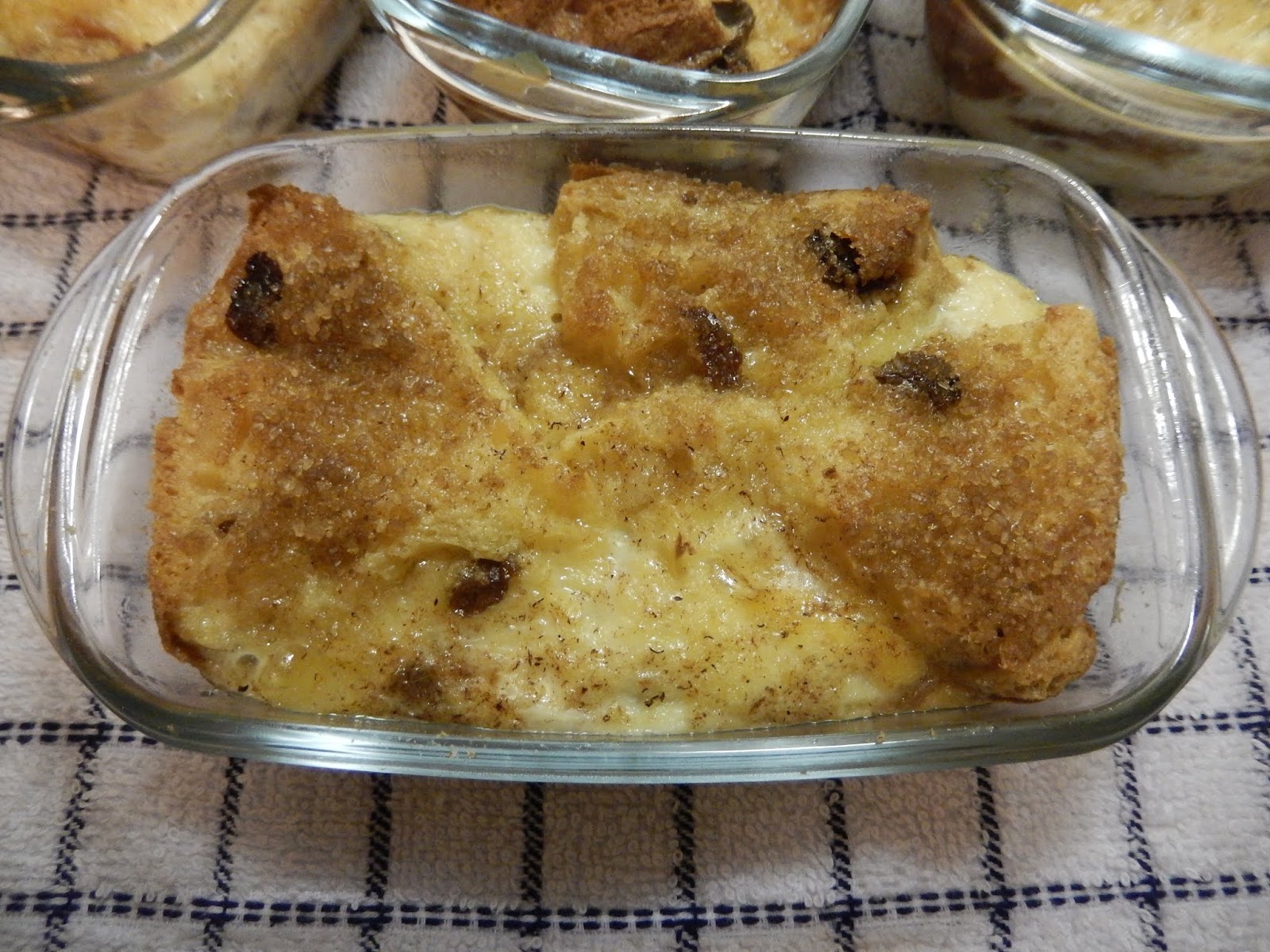
This dessert used up a panettone  bought for Christmas, in case of an unexpected need which didn't arise. I also had fresh lemons and an opened jar of lemon curd to use up, so as the panettone contained mixed peel, a lemon B & B pudding seemed the way to go.

I decided to make 4 individual puddings so that 2 could be frozen. I'm not sure how well they'll freeze, but I thought it was worth a try, rather than eating  a calorific dessert for 4 days running. I'd eaten one portion of the panettone, so I estimate there was about 425-450g left of the loaf.

I halved the loaf from top to bottom and sliced one portion into thin semicircular slices, which I sandwiched in pairs, spread with lemon curd. The rest of the panettone was cut into 4 slices to fit in the bottom of the dishes - I spread these with lemon curd too, and put into thickly buttered dishes curd side uppermost. Any trimmings and leftover pieces of panettone were crumbled and divided between the 4 dishes, then the semicircular sandwiches were cut and arranged neatly on top. I brushed the top of each pudding with more melted butter to help it crisp in the oven.

I hadn't realised until I started comparing recipes the wide range of egg:milk ratios used, as well as various baking times and temperatures, so the rest of the preparation went on a kind of average of the recipes I looked at.

I whisked together 3 large eggs, 50g caster sugar, the zest of 1 lemon and 500mls of semi-skimmed milk, and divided it between the 4 dishes. These were left standing for 30 minutes before baking, to allow the liquid to be absorbed into the bread - I pressed down with a fork occasionally to make sure the top pieces of panettone soaked up the custard mixture.

I added a little grated nutmeg and a sprinkling of demerara sugar to the top of each pudding, before baking at 160C (fan assisted) for 35 minutes. I intended to bake until the puddings were set, but still wobbling a little in the middle, but I think I baked for about 5 minutes too long.

These were lovely little puddings; adding lemon curd boosted the flavour nicely. I think adding some more dried fruit (such as a handful of sultanas) would have been an improvement and using a little more milk - another 100ml, perhaps - would have made the puddings softer and lighter, but I was pleased with them as they were.

As usual, with things that look their best straight from the oven, I didn't manage to get very good photographs of these. Not only were the light conditions far from perfect, they were visibly deflating as I watched them!

Wednesday, 22 November 2017

Apricot and Lemon Bread and Butter Pudding

I made this 2-portion pudding in individual dishes, but if it was made in one dish it could easily feed three people; I was a little too greedy! The ingredients list is a bit vague, because the only thing I measured accurately was the milk.

Ingredients
*4 thick slices of brioche, each about 10cm square
butter, softened
apricot jam
a handful of soft dried apricots, chopped
a small chunk of glacé lemon peel chopped finely (optional)
2 medium eggs
225mls semi-skimmed milk
zest of half a lemon
1 tablespoon caster sugar, plus a little more for sprinkling on top
freshly grated nutmeg

*or use plain white bread from a small loaf  - slightly stale bread can be used for this sort of pudding

Method
Thickly butter two individual baking dishes, which have roughly 350mls capacity each (or use one larger dish).
Mix the apricots and peel together, if using.
Use more butter and some apricot jam (fairly thinly spread), to make two sandwiches with the brioche.
Cut the sandwiches into suitably sized pieces to fit into your chosen dishes - I cut mine into 8 tiny triangles to get a tight fit.
Share half the pieces of sandwich between each dish and sprinkle with 2/3 of the fruit.
Arrange the rest of sandwiches on top, trying to keep the top fairly level and sprinkle over the rest of the fruit.
Mix the eggs, milk, lemon zest and caster sugar together in a jug and divide equally between the two dishes. Leave to stand for up to an hour to allow the custard mixture to soak into the bread.
When ready to cook, preheat the oven to 180C (160 fan). Sprinkle a little more sugar over each pudding and then grate over some nutmeg.
Cook for 25-30 minutes, until golden brown and crisp on top. One large pudding might take a few minutes longer.

This was a tasty version of the standard B & B pudding - the touch of lemon, and the tartness of the dried apricots, cut through the sweetness added by the jam.

I apologise for the awful photo - I wanted to get the puddings fresh from the oven, as they deflate as they cool and don't look so attractive, so had to use flash.


Wednesday, 15 February 2017

Norwegian Spiced Chocolate Cake

for Clandestine Cake Club

The theme for a recent meeting of my local Clandestine Cake Club (CCC) was 'How to Hygge', which seems appropriate for mid-winter, as Hygge cooking concentrates on warming spicy flavours and 'comfort' food. Even though Hygge is a Danish word, the Swedes and Norwegians have the same concept of warmth and cosiness, particularly during the long dark winters. This meant I didn't feel constrained to search for only Danish recipes, fortunately. The problem with Scandinavian baking, from a CCC point of view, is that Scandinavians seem to be hotter on the types of baking that can't be taken to CCC - yeasted buns, small pastries, biscuits and tarts etc.

I have The Nordic Bakery Cookbook, and tried out the basic cake recipe in there, making a ginger cake, and although it was delicious, I felt that it was too dry and plain for a CCC meeting. Finding no relevant recipe books in the local library, I resorted to what I could find online - which was mostly recipes from The Nordic Bakery or Scandilicious. Signe Johansen's recipe for Spiced Chocolate Cake, from Scandilicious, soon caught my eye, but I was disappointed that the recipe made a very stodgy cake when I tried it (see photo, above) The batter was difficult to marble too, as it was so shallow - I hoped the layers would swirl more as they cooked.

At that point I was running out of time to try other recipes, so decided to embrace the concept of this Spiced Chocolate Cake (also known as Tropisk Aroma), by keeping the flavourings used in Johansen's recipe, which I'd really liked, but using an ordinary sponge cake recipe as a base. I also decided to make the three layers as a sandwich cake, as in this recipe, rather than layer the batters into one pan, and swirl them before baking, as in the original recipe, pictured here. While I was making changes, I also decided to use a rich chocolate fudge frosting and filling, rather than buttercream, which I find is sometimes too sickly.

Ingredients
225g butter, softened
225g caster sugar
4 large eggs
250g SR flour
1 teaspoon baking powder
1 tablespoon instant coffee, dissolved in 1 tablespoon milk
1 1/2 teaspoons cinnamon
1 1/2 teaspoons freshly grated nutmeg

50g melted plain chocolate, cooled to lukewarm
2 tablespoons cocoa

extra milk, as necessary

*Frosting: 200g plain chocolate (70% cocoa solids), 35g butter, 50mls milk, 2 generous tablespoons golden syrup.

Method
Prepare 2 x 20cm (8") sandwich tins, at least 4cm (about 1 1/2") deep, and preheat oven to 180C, fan 160C.
Put the butter, sugar, eggs, flour, baking powder, coffee-flavoured milk, cinnamon and nutmeg into a large bowl and beat with an electric mixer until well blended and aerated. Add a little extra milk if necessary, to give a dropping consistency.
Weigh 500g of this batter into one of the sandwich tins and spread evenly.
Beat the melted chocolate and cocoa into the remaining portion of batter, again adding milk if necessary.
Spread this chocolate batter into the second sandwich tin.
Bake both cakes for 25-30 minutes, until risen and firm.
Cool in the tins for a few minutes, then turn out onto wire racks to finish cooling.
Make the frosting by melting the chocolate and butter together, either in a bowl over a pan of simmering water, or in a thick bottomed pan directly over a very low heat, stirring occasionally. Remove from the heat and  beat in the milk and golden syrup. Cool until the fudgy frosting holds it's shape.
Split the coffee sponge layer in two horizontally, and place the bottom layer on a serving plate.
Using roughly 1/4 of the frosting each time, sandwich the chocolate layer between the two thinner coffee layers.
Spread the rest of the frosting on top of the assembled cake and decorate as you wish - a dusting of cocoa seems to be traditional, but I just marked a pattern using a fork.

* most versions of this cake that I've seen online completely cover the cake in a thick layer of chocolate buttercream. To do that with this frosting recipe I think you would need twice the amount I've given here!

I really liked the combination of flavours here! Chocolate and coffee always work well together but the combination of nutmeg and cinnamon added a very subtle warm spiciness. If I made this again I think I'd increase the spices to 2 teaspoons of each - the flavour was perhaps a little too subtle!

Tuesday, 27 September 2016

Courgette and Apricot Cake

This was a last ditch attempt to make a light and sponge-like courgette cake. After the numerous attempts I've made, I've always said that I wanted a cake which was as light as the 'Yummy Scrummy Carrot Cake' (I can't bear that name!) on the Good Food site, and that each particular version I tried wasn't quite right!

Finally the light dawned - why not use that recipe, with courgettes instead of carrots?

As I've often thought that the problems with courgette cakes are down to courgettes being a much more watery vegetable than carrots, I grated about 30% more courgettes than the recipe required and squeezed out as much excess water as possible, using a clean tea-towel, before weighing the 140g needed. I replaced the raisins with chopped dried apricots and used 1/2 teaspoon of nutmeg as the only spice, leaving out the cinnamon. Everything else followed the recipe!

Surprise, surprise - it worked! I'm sure that part of the reason this recipe was more technically successful was that it used a smaller proportion of courgettes than other recipes I've tried, and the other part was probably down to squeezing out excess water. The flavour of the cake was less successful -  I didn't feel that the dried apricots and nutmeg worked well together - but that's easily remedied in the future.

I'm happy to find a courgette cake recipe which gives me what I've been looking for, although it isn't one that will make a huge dent in the usual summer glut!

Saturday, 26 March 2016

Apple Cake with Lemon and Chocolate Flecks

After being so impressed with a Honey & Co cake recipe I tried recently, I managed to borrow a copy of their baking book (called Honey & Co. The Baking Book) from the local library. The recipes looked every bit as appetising as I'd expected, and there are quite a lot that I'd like to try, so this book is definitely going onto my wish list.

This cake was first recipe I tried from the book, mainly because I had all the ingredients to hand. It was another amalgamation of flavours that you wouldn't necessarily think to put together  - I've never been convinced that lemon and dark chocolate works well together, let alone with apples in the mix. As before, the clever addition of unusual spices really made the cake something special, although I thought it might have had an even better flavour without the chocolate - and it's not often that I think chocolate is an ingredient too far! Technically, the cake wasn't a complete success either - it was a very liquid batter, which meant the apple pieces sank, and it was just a little too moist. It might have been more successful baked as a more shallow cake and served warm as a dessert!

Ingredients
2 tablespoons whiskey
zest and juice of 1 lemon
2 apples (200g once diced, skin on) - Pink Lady recommended, but I used Jazz, and only needed 1 1/2 apples.
40g plain (70% cocoa solids) chocolate
2 large eggs
160g caster sugar
120g/130ml vegetable oil - I used sunflower
150g plain flour
1 1/2 teaspoons baking powder
1 teaspoon ground nutmeg - about 1/3 of a whole nutmeg
1 teaspoon fennel seeds - ground in a pestle and mortar
a pinch of table salt

Method
Preheat the oven to 180C and prepare a 2lb/900ml loaf tin.
Mix the whiskey with the lemon juice and zest. Cut the apples into 1cm cubes, leaving the skin on, and toss them in the whiskey mixture to stop them discolouring.
Chop the chocolate into slivers - I shaved pieces off the block with a heavy knife to get flecks of chocolate - and put in the fridge to chill.
In a large bowl, whisk the sugar and eggs until light and fluffy, then slowly whisk in the oil to make an emulsion.
Fold in the flour, baking powder, spices and salt with a spoon, then stir in the apple mixture (with the liquid) and finally the chocolate flecks.
Transfer the batter to the loaf tin and bake for about 55 minutes, turning after 35 minutes to give an even bake.
Cool in the tin for 15 minutes before removing.


Friday, 20 November 2015

Buttermilk Fruit Cake

When I decided to make a chocolate and banana cake, and was looking for recipes, I initially decided on a chocolate chip cake using buttermilk. When I changed my mind, I was left with a carton of buttermilk which needed using quite quickly, as it didn't have a long 'use-by' date. Another search for a recipe was on! This time I wanted something seasonal, not too big, and not too fancy.

This fruit cake recipe, found on Joy of Baking, which adds dates, spices and other dried fruit to a buttermilk cake batter, fit the bill perfectly. The recipe didn't need any eggs, which was quite intriguing, just relying on the action of bicarbonate of soda with buttermilk to raise the cake. I didn't have currants or raisins needed to follow the recipe exactly, but used 100g sultanas and 100g of a mix of chopped dried apricots, sour cherries and crystallised ginger instead.

Making the cake was straightforward - just mix wet ingredients into dry ingredients, then stir in the dry fruit, so only a saucepan, a couple of bowls and a spoon was needed. As my buttermilk was cold, I melted the butter in a saucepan, then added the buttermilk and just warmed it slightly. I also dropped my dates into the measured flour, then cut them into small pieces with scissors, rather than chopping them on a board - much easier.

The thing I really enjoyed about this cake was the spice mix; allspice isn't something I use often but it really worked well with cinnamon and nutmeg to give a warm and peppery background flavour to the dried fruit. Overall the cake was moist and well textured - the absence of eggs wasn't obvious.

Baking the cake in a 9" x 5" tin made what my mother would have called a 'slab cake' - something deeper than a traybake but shallower than normal for a cake. I think a smaller baking tin would have made a cake with better proportions, but it may not have cooked as well; I'm sure there was a good reason for that sized tin being used.

Friday, 19 June 2015

Linzer Squares

This variation of the famous Austrian pastry, Linzer Torte, was inspired by this recipe I saw on the blog Bake or Break - it looked so pretty! However, I really love the hazelnut pastry that Delia Smith uses in her Linzer Torte, so I decided to combine the best of both recipes - Delia's pastry and the presentation style from Bake or Break. Traditionally, I think Linzer Tortes are usually filled with either redcurrant or raspberry jam, but even Delia seems to have tossed tradition aside, and now uses cranberry jelly, so I had no qualms about using three different jams to fill this version of the recipe.

I made 1.5 times the amount of pastry in Delia's recipe, but used a whole egg and some water to bind the dough, rather than 3 egg yolks, as I didn't want egg whites waiting to be  used up. This amount of pastry was enough to line a 12 x 8" (30 x 20cm) tin, after 200g had been put aside for the topping. I raised a shallow wall of pastry along the edges of the tin, just to stop the ram running off, then used 3 varieties of jelly-style jam to spread over the pastry base - redcurrant, apricot and blackberry. The redcurrant and apricot were ends of jars that needed using up, and there wasn't quite enough to use equal amounts of each, unfortunately  - I think the squares would have looked better with less of the darkest jelly.

I rolled out the set aside portion of dough and cut out small circles of various sizes, and dotted them over the jam. This was certainly much easier than making a lattice, especially as the dough is fairly soft and can be difficult to work with. The tray was then baked for 35 minutes at 190C, until the pastry was beginning to turn golden brown. After cooling, I cut the pasty into 12 squares, which wasn't easy, as the pastry circles wanted to sink into the jam, rather than yield to the knife!

These made a tasty little treat, although my husband always reminisces about his mother's jam tarts whenever I bake them. She cooked hers at a very high temperature until the jam had cooked to a very sticky  texture, and was quite chewy, rather than still jam-like! I think my pastry would have been burnt before that happened with this recipe.

The bottom of the three photos, a piece taken from a corner of the traybake, was the best picture to show all three colours of jam together, although it's not a good looking piece of pastry!.

Despite these squares not being traditional to Austrian cooking, I am entering them into the Formula 1 Foods challenge on Caroline Makes, which asks us to make something inspired by the country where each stage of the F1 GP season is taking place. This coming weekend the race takes place in Austria - a relatively easy country from which to take inspiration.

Monday, 2 March 2015

Jammy Bread and Butter Pudding

As a cake and dessert maker, a lot of what I make contains eggs - cakes, tray bakes, brownies, cookies, mousses and cheesecakes. They are indispensable for perfect results, and often the most nutritious part of many recipes. So I'm happy to join in with Belleau Kitchen's new blogger link-up - Simply Eggcellent - which celebrates the versatility of eggs.

Bread and Butter Pudding is made from bread soaked in a simple egg custard - usually just eggs and milk or cream, and maybe some sugar. The fun comes with the extras that can be added - dried and fresh fruit, chocolate, alcohol, preserves, nuts and spices.

This Jammy Bread and Butter Pudding was a spur of the moment dessert, to use up the end of a stonebaked sourdough baguette and the last of a carton of sour cream. I decided to keep things simple and use gooseberry jam to provide the main flavour, some sultanas for juicy fruit chewiness and a little nutmeg to spice it up a little.

I sliced the bread thinly and made jam sandwiches, which I fitted into a small ovenproof dish, interspersed with a handful of sultanas. The baguette was quite thin, making it impossible to remove the crusts, so I arranged the bread with the crusts uppermost, so that they would make a crisp topping after cooking.

I was only making two portions, with about 100g of bread, so a custard made from one large free-range egg, 50ml sour cream and 150g milk was sufficient. I didn't add any extra sugar to the custard as the jam was going to provide a lot of sweetness.

I poured the egg mixture over the bread and left the dish to stand for about an hour before baking, to allow the custard to soak into the bread. Before baking I sprinkled the top of the pudding with Demerara sugar and a grating of nutmeg. I baked the pudding in a bain marie, at 180C for 45 minutes.

Using jam to flavour this bread and butter pudding worked very well; together with the sultanas and sugar topping it was plenty sweet enough. The custard soaked bread was light and moist, with a lovely crisp crunchy topping made from the crusts on the slices of bread and the sugar.

As usual, it isn't good for food photography to take something out of the oven at 6pm, and need to get it photographed before it's eaten a few minutes later, so I apologise for the strange colour!

You can read all about Simply Eggcellent on the link above. I look forward to seeing how Dom, at Belleau Kitchen, develops the core theme of eggs over the coming months.

Wednesday, 5 February 2014

Buccaneer Shortbread

Another tasty twist on the more traditional Millionaire's Shortbread, from Shivi Ramoutar of The Rum Kitchen restaurants, via The Guardian's "Cook" supplement (scroll down to the fourth recipe). This time there are spices and coconut in the shortbread to increase the flavour components, and the caramel and chocolate layers are lightly salted too.

This is quite a rich recipe, and makes a big batch, but I felt justified in making it, as CT was coming to dinner and could take half home with him, to remove temptation. I had trouble making the caramel, which split as it was simmering, but
I rescued it with this tip about adding hot water.

All the layers were very thin, and I think it would have been better made in a slightly smaller tin. This would make the bars less fragile to handle after cutting too - the crumbliness of the shortbread and the gooiness of the caramel, combined with hard set chocolate did not make neat, photogenic bars!

All that aside, these were delicious! The spices and salt cut through the sweetness a little, and the coconut was definitely a good flavour to add to the shortbread base.

Sunday, 5 May 2013

Kentish Pudding Pie - for AlphaBakes


There are times when taking part in blog challenges stretches my family's tolerance a bit too far and I think that might have been the case here. K was never going to be an easy letter to use for this month's AlphaBakes Challenge, as there are very few ingredients beginning with that letter. Going for geographic Ks was just as difficult - I had to reject Kentucky Derby Pie, even though it sounded delicious to me, as being just too nutty for FB to want to eat.
 
Closer to home, Kent showed more promise, and I eventually settled on this traditional English pie, also known as Kentish Lent Pie, which is basically an enriched ground rice pudding baked in a pastry case. This sort of pudding dates back to the time when fat and flour was a major source of energy for many people, and eggs and milk were readily available for country dwellers.  Some sources suggest it was eaten during Lent, when meat was forbidden, as it would be quite nutritious, but to me it seems to be in the same class as pancakes, which were eaten just before Lent to use up excess eggs and milk, which wouldn't be eaten during the abstemious period leading up to Easter.  

This dessert is described in some places as similar in taste to a baked cheesecake, but to me, with the added nutmeg, it was more like a baked egg custard tart, with a less delicate texture. The flavour was very bland, and I'm glad I included the lemon zest and extract, as suggested in the recipe I eventually followed for the filling. Without it, I don't think anyone would have wanted to eat more the next day.

I made my own pastry recipe, using SR flour for a little extra lightness, and followed the Baking Mad recipe for the filling, using sultanas instead of currants. The pie tin I used was a little larger than the 20cm (8") suggested in the recipe, and I think an extra half quantity of filling would have made a better balanced pie.

This was a pleasant enough dessert, improved by a helping of roast rhubarb, but it's not going to make it's way onto the list of things to repeat any time soon. (I haven't even dared tell my husband that there's ground rice in it - rice pudding is anathema to him!)

AlphaBakes is a monthly baking challenge hosted alternately by Caroline of Caroline Makes, and Ros of The More Than Occasional Baker. It's name speaks for itself, but more information, and the rules, can be found here. Caroline is hosting this month, when the random letter to use is K, and she will post a round up of entries at the end of the month.

Thursday, 11 November 2010

Hazelnut Prune Cake

It's not often that Hubs asks for anything specific in the food line - except that if I ask what he wants for dinner, the answer is always sausages! LOL! So when he looked at this recent Dan Lepard recipe for Hazelnut Prune Cake, and said he wanted to try it, what could I do but obey? (Don't answer that I could have made him cook it - I think he can cook, but he's never baked a cake and hasn't cooked a meal since the time I was incapacitated after an operation, which was probably 15 years ago!)

Another excuse to give in to him is that I'm baking Dan's Chestnut Brownies again this weekend, and he didn't really like them. He certainly liked this cake, though, and so did I! You do need to like prunes, however, as the other ingredients don't hide the flavour of 300g of prunes - that's a lot of prune in each slice! As usual it was a simple recipe to follow, although toasting and chopping hazelnuts, and snipping sticky prunes into pieces with scissors was quite time consuming.

I had a slight worry that the cake batter was too stiff, bearing in mind the prunes would absorb liquid as the cake cooked, but decided to trust Dan, and not add any extra milk. I used a slightly larger cake tin but the cake still took 60 minutes to cook against the suggested time of 50 minutes in the recipe. While the cake was cooking I dithered about which alcohol to use to finish the cake as I didn't have any brandy; the choice came down to rum or Amaretto and in the end I went with the Amaretto - drizzling about 3 tablespoons over the hot cake, after pricking a few holes with a cocktail stick. This turned out to be a good choice - it really enhanced the nuttiness of the cake.


The finished cake was moist and sticky, and the nuts and prunes really stood out as dominant flavours. However, the  brown sugar, nutmeg and a little cocoa, together with the liqueur, gave a subtle background flavour which was hard to identify. A really delicious cake which would make a good Christmas Cake if you want something lighter and moister than a traditional cake.