Showing posts with label blackberries. Show all posts

Tuesday, 1 October 2019

Autumn Fruit Frangipane Tarts

It's a measure of how little baking I do these days, that it's over three weeks since I last posted. When I do bake anything, however small, half of it usually ends up in the freezer, meaning there's always cake there if needed, but as a result I don't need to bake as often. My waistline doesn't need cake every day, either!

When making this tart I realised that I hadn't made any pastry since the festive baking at the end of 2018 - an indication that calorific desserts are also becoming something for special occasions; I usually just have fresh fruit and yogurt!

These Autumn Fruit Frangipane Tarts had plum jam in the base and fresh blackberries and pieces of eating apple embedded in the frangipane mixture. I made two small tarts instead of one big one, as I was taking one to my local Cake Club. The frangipane comes from this Jamie Oliver recipe, but I made half as much again, after seeing the amount the original ingredients gave.

I made sweet shortcrust pastry to this recipe, but this made enough for the two tart cases with quite a lot leftover: 300g plain flour, 1/2 teaspoon baking powder, 150g butter, 50g icing sugar, 1 medium egg, water as necessary to bind. If you reduce the quantities you could use just an egg yolk instead of a whole egg.

Once the pastry is mixed, rest in the fridge for 20 minutes, then roll out as thinly as possible to line 2 x  20cm (8") tart tins (or one 23cm tin if you're following the recipe). Refrigerate again while you make the filling - there's no need to blind bake with a frangipane.

Preheat the oven to 180C (160 fan) and put a baking sheet in to heat up too.

Put all the frangipane ingredients into a bowl and beat until well combined. I added just a few drops of almond extract, to give a better flavour, instead of the lemon zest in the recipe. Then prepare the fruit.

(I used one large eating apple, which I peeled and chopped into quite thin pieces, about 1cm square, and put into acidulated water so that the pieces didn't turn brown. I also used fresh blackberries, as I was worried that frozen would release too much juice and spoil the colour of the frangipane - I didn't weigh the amount I used but the quantity give in Jamie's recipe sounds about right.)

Spread a couple of tablespoons of plum jam (or whatever red jam you prefer) into the base of each pastry case. Divide the frangipane mixture between the two tarts, working from the edge inwards, and trying to get a good seal between the frangipane and the pastry, so that the jam doesn't boil out around the edge. Spread evenly and then dot the drained and dried apple pieces and blackberries over the surface, pressing down gently to embed them in the frangipane. Sprinkle over a handful of flaked almonds, then a little extra caster sugar.

Transfer to the heated baking sheet and bake for about 45 minutes until the frangipane is a good golden colour and feels firm. Cool on a wire rack.

I decorated the tart which I was taking to Cake Club with a drizzle of glacé icing, but it's not really necessary, and the icing soon dissolved where it was in contact with the pieces of fruit, so didn't really give the desired effect by the time it was eaten.

Adding fruit to a frangipane tart is a tasty bonus, although in this case the plum jam had a stronger flavour than the apples and blackberries - I should have looked for a blackberry jam, I think.

My tart looks darker than most frangipane because I was using almonds which had been ground with the skins still on; the jury is still out on whether this really gives a good look.

Sunday, 23 October 2016

Blackberry and Coconut Crumble Cake

This cake is based on this recipe, although I made a few minor changes along the way. For a start, I didn't have enough butter in the house, so I decided to use coconut oil instead. As I reduced the amount of fat used in the recipe, to compensate for coconut oil being 100% fat, I thought I would need more liquid in the cake batter, but I only needed about half the volume of milk suggested in the recipe (and a couple of tablespoons of rum), to give a good dropping consistency. If I'd used the amount of liquid originally suggested, I'm not sure the blackberries would have stayed on the surface.

These are the ingredients I used to make the sponge base, which was spread into a 22cm springform tin: 160g coconut oil, 170g caster sugar, 2 large eggs, 1 teaspoon vanilla paste, 2 tablespoons rum, 150g SR flour, 150g plain flour, enough milk to give a dropping consistency (about 100mls). On top of this I spread 230g blackberries in a single layer, then topped with a crumble mix made from 75g plain flour, 50g butter, 55g light muscovado sugar and 45g desiccated coconut. This was baked at 180C for 85 minutes, covered with foil after an hour.

I wasn't expecting a light sponge, as there was double the amount of flour to fat and sugar, and half of it was plain flour, but this really was a dense cake! It was very tasty though, as it wasn't over-sweet and the tang of the blackberries was still evident. The coconut in the crumble added a good flavour and texture, and it was nice to use blackberries with something other than apples.

Because of the denseness of the sponge, this would probably have been better as a warm dessert, with custard, as suggested. I think if I made it again as a cake, I would use all SR flour to try to make it a little lighter.

Friday, 29 July 2016

Apple and Berry Crumble Cake

I've still got blackberries from last year, and also found a small container of frozen blueberries while assessing the space in the freezer, prior to this year's gooseberry harvest. I'd also got a couple of Bramley apples to use up, so something using all three seemed a good idea.

This recipe, for an Apple and Berry Crumble Cake, which I found on the Good to Know site, was quick to put together, as part of the base mixture was put aside for the crumble topping, rather than needing to make two separate mixtures. I used 300g total weight of mixed blackberries and blueberries as I had less than 100g of blueberries in my little pot in the freezer. I didn't bother thawing the berries ahead of use, either! In place of the mixed nuts in the topping, I used toasted chopped hazelnuts, but apart from these minor changes, I followed the recipe exactly. I didn't need to cover the cake while it was baking - even after the full cooking time it was only lightly browned.

I was worried that the combination of Bramley apples and frozen fruit would make the cake too wet but this wasn't the case, if anything the crumble topping was too dry and powdery. I think this would have made the cake quite unpleasant to eat on it's own, but it was fine as a dessert with vanilla yogurt. The fruit didn't have any extra sugar added to it, so it made a nice sharp layer between the sponge and the crumble.

Thursday, 20 August 2015

Blackberry and Hazelnut Polenta Cake (gluten-free)

Several weeks ago I bookmarked a gluten-free cake recipe that I wanted to try, but for various reasons I hadn't got around to making it. After we'd been blackberry picking, I remembered the cake, and even though it was made with raspberries, I thought the recipe would work well with blackberries too, and make a change from apple and blackberry crumble. My husband loves a fruit crumble above all else, so he needed a little persuasion that change was a good thing!

Necessity forced a few other changes too - ground hazelnuts instead of almonds, and the zest and juice of a lemon and a tangerine, instead of 2 lemons. I really don't like making huge alterations to recipes before I try them as written, but I was confident that my changes would only affect the flavour, not the technical aspects of the recipe. I might have been wrong about that!

The cake batter looked a little strange when mixed - it was very grainy but I put this down to my home-ground hazelnuts not being as fine as commercially ground almonds. It was also quite sloppy, possibly for the same reasons - I hoped that once the polenta started absorbing the moisture during baking it would sort itself out. It did sort itself out in the oven, but not before all the fruit sank to the bottom. This could have been because of the sloppy batter, or because blackberries are heavier and juicier than raspberries.

Now I'm interested in trying the recipe exactly as written, to see if my changes affected the outcome, or whether it wasn't such a good recipe in the first place, and the fruit will sink even when raspberries, and finely ground almonds are used.

None of this stopped the cake being absolutely delicious. Hazelnuts and blackberries are a good flavour combination, and the subtle hint of citrus blended in well without overwhelming everything. If the fruit had stayed evenly distributed throughout the cake, I'd have said that 200g wasn't really enough, but more sinking fruit would have made the bottom of the cake too moist.

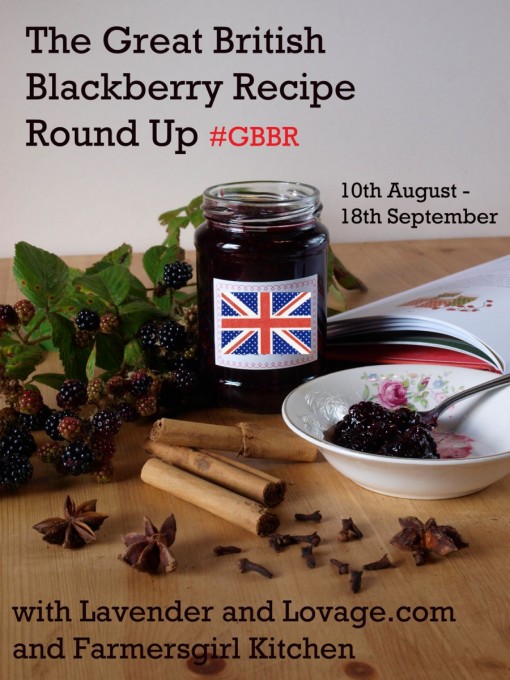
The Great British Blackberry Recipe Round-Up
Karen, over at Lavender and Lovage, and Janice at Farmersgirl Kitchen are co-hosting a round-up of blackberry recipes until mid-September, so I'm submitting this recipe for it's deliciousness, even if the technical execution wasn't perfect! 

Sunday, 3 November 2013

Blackberry-glazed Apple and Hazelnut Cake

The inspiration for this cake came from watching Hugh Fearnley-Whittingstall's new TV series, River Cottage to the Core, in which he is trying to get us to eat more fruit, particularly in savoury dishes. He hasn't entirely converted me yet, although the pear, spinach and blue cheese pizza looked delicious. However, he also made this lovely looking cake to reward his little blackberry pickers, and I thought the idea of a fruit purée topping was very effective.

H F-W topped a plain sponge cake with blackberry purée, but I decided to go a step further and pair the blackberries with one of their natural partners - apples. I also decided to add ground hazelnuts to the cake batter to bump up the flavour and make the cake as seasonal as possible.

For the cake, I made an all-in-one batter, using 150g each softened butter, caster sugar and SR flour, 50g ground hazelnuts,  3 eggs, 1 teaspoon baking powder, 1 teaspoon vanilla extract and two tablespoons of milk. To this I added a large apple, peeled, cored and sliced. I used one of my home-grown apples which are suitable for cooking and eating - you need an apple which keeps it's shape when cooked, which are usually eating apples. I cut the peeled apple into 8 wedges, then sliced these across to give pieces about 2 cm square and 3mm thick.

I cooked the batter in a 18cm (7") tin, lined with a paper case. I started the cake at 180C but lowered the heat half way through as the cake was browning too quickly; I also covered the cake with foil at this point. Altogether the cake was in the oven for 75 minutes - the batter was quite deep in a 18cm tin. I followed the usual advice to cook until an inserted cocktail stick comes out clean - no wet crumbs adhering to it.

While the cake was cooking, I made a smooth fruit purée from 250g blackberries and 50g sugar, cooked briefly and sieved to remove pips. When the cake came out of the oven, I made holes all over the surface with a skewer and slowly spooned on as much of the still-hot purée as I could get on, then cooled the cake still in the tin. Despite quite large holes being made, the purée didn't really soak in very far, but it still looked very striking. The cake itself was very light, and both the apple and hazelnut flavours came through well. The tart blackberry purée was a good contrast to the sweet, tender cake, and the pieces of apple added to the texture.

I used the cake as a dessert, served with natural Greek yogurt and more blackberry purée.

Wednesday, 28 August 2013

Raspberry and Blackberry Almond Ripple Cake

I bought a 200g punnet of raspberries, intending to make this Raspberry and Amaretti Crunch Cake, with some Amaretti biscuits approaching their use-by date, but the reviews said the biscuits lost their crunch after the first day, which was not really a surprise, but deterred me from making it, as I knew the cake would be around for at least three days. It seems to be a cake which needs eating at once to really appreciate the texture - perhaps the right occasion to make it will arise!.

I looked around for other recipes for slightly unusual raspberry cakes and came across this one for a Raspberry Ripple Cake; the only problem was that it needed 300g raspberries. I decided to make the first stage - the fruit purée - with 100g of blackberries from the freezer, and use the fresh raspberries in the other stages - the fruit added to the cooked purée and the topping.

While I was making changes, I also decided to replace 50g of flour with ground almonds and add a few drops of almond extract to the cake batter too, to introduce more of the almond flavour the original cake would have had. As my eggs were large, I omitted the extra egg yolk and added a little more milk to give the batter a dropping consistency.

Using blackberries turned out to be a really good idea; the ripple layers were tart and intensely flavoured and a good contrast to the sweet raspberries topping the cake. The cake was a little denser than I'd hoped for, especially considering that it needed refrigerating to keep it fresh, but I can use the idea of the fruit purée to make ripples in a better cake batter.

I forgot to swirl the ripples before adding the topping and this would probably have made the cake look even better. The blue background of my cake box is not the best look, either, but the cake was too difficult to move once it had been put there.

Well, we're off to Canada for the first two weeks of September (for a tour of Vancouver, the Inside Passage and the Rockies), so I won't be posting for a while. By the time we get back it should be apple picking time and autumn cooking.

Friday, 31 August 2012

Do you Fancy a Fumble?

I'm sure you will fancy a Fumble when you know what it is - it's delicious!

A Fumble, in this case, is Hugh Fearnley-Whittingstall's name for a fruit fool topped with separately baked crumble crumbs. As he says, its a good way to get the three elements of a good dessert - fruit, something creamy and portion of a crisp carbohydrate -  together quickly and simply. You can see his recipe for Strawberry Fumble here, along with more ideas for the 'three-piece sweet' (his phrase, not mine!).

I thought the idea was a good way of allowing the dieters in the household (sob!) to eat dessert without all the calories of a traditional crumble. Those watching calories (more sobs!) can eat a large portion of fruit, topped with low fat yogurt and a few crumble crumbs for a contrasting texture. Everyone else can choose their own balance of fruit, cream or custard, and crumble topping - as much crunch as they like!

The idea worked very well with a warm compote of eating apples and blackberries. You don't get that lovely starchy layer, soaked in fruit juices, which forms between the fruit and the crisp crumble in the real thing, but it's close enough, and the texture contrast is good even with just a few pieces of crumble. I think the combination would be just as tasty with room temperature or chilled fruit mixtures too.

The crumble mix is pretty standard, although a bit heavier on the butter than the mixture I usually use - I found I had to fork through a couple of tablespoons of water to get the mixture to form clumps rather than a fine crumb, but maybe I rubbed in the butter too much. The clumps get crisper than a traditional crumble topping, but this helps them keep well, and you could always try sprinkling them over warm fruit and letting them stand for a while to soak up some fruit juice.

Monday, 16 January 2012

Pineapple and Blackberry Crumble

This crumble was inspired by one of the dishes made in the third heat of the Celebrity Sport Relief Bake Off Challenge, shown on TV last week. TV presenter Anita Rani, who went on to be the overall winner, made a Pineapple and Blackberry Crumble with the coconut added to the crumble topping. No recipe was given for this, but it wasn't difficult to figure out a recipe which at least featured the same flavours in the dish. Anita added (I think) cinnamon and vanilla to her pineapple, and flamed it with rum while it was cooking. She then mixed in raw blackberries before adding the topping.

As usual, with this sort of thing, my recipe is a bit 'thrown together' as I don't weigh the fruit. I know that if I half-fill my large Pyrex dish with fruit and top it with a crumble mix made from 80-100g of each ingredient, I'm going to get 4-6 portions depending on appetite. I also took the opportunity to use more of the Light at Heart sugar/stevia mix that I've been given to try. The added stevia reduces the calories by half as you only need to use half as much sugar as usual.

So, this is roughly what I did!

Peeled, cored and chopped 2/3 of a standard sized supermarket pineapple into chunks.
Thawed a roughly equal volume of blackberries.
Melted about 40g unsalted butter in a frying pan and added the pineapple. As it started to cook I added 1 tablepoon of brown Light at Heart (or 2 tablespoons light muscovado sugar), a half teaspoon cinnamon and a teaspoon vanilla extract. I then poured on two tablespoons of rum which I mixed in and then flamed. I then turned up the heat and reduced the pan juices to a sticky caramel. The fruit was then cooled.
For the crumble mix, I rubbed 80g unsalted butter into 80g plain flour, 80g whole rolled oats and 40g white Light at Heart (use 80g regular white sugar). I then stirred in 20g desiccated coconut. I think it's important not to make the mixture too fine - leaving a few lumps of butter and some clumps of crumble adds to the texture.
The cooled pineapple was mixed with the blackberries, and 1 tablespoon of cornflour, to thicken any juices. The fruit was put into a deep casserole dish with a 1litre capacity, and the crumble mix was sprinkle evenly on top and pressed down lightly.
The crumble was baked until the top was golden brown and the fruit bubbling. I usually do this at 180C for about 45 minutes, but I started at a much higher temperature with this dish because I was cooking something else in the oven too. It had the first 10 minutes at 220C which didn't seem to do it any harm. It then finished off at 180C, with about 25 minutes cooking overall.

This was a really good combination of flavours - the pineapple, cinnamon, vanilla and hint of rum gave a tropical flavour, and fantastic smell, when added to the coconut in the topping. I'm not sure I'd have recognised the blackberries in a blind tasting but they added another taste dimension and a lovely colour to the dish. Coconut in the crumble topping is definitely an innovation I'll be using again with suitable fruit! Using the Light at Heart sugar in this context was fine too - I didn't notice anything different in the volume, taste or texture of the crumble mix.

Tuesday, 10 August 2010

Blackberry, Apple and Maple Loaf

The first wild blackberries are just appearing locally. They are small, as it has been dry this year, but my favourite patch is giving sweet fruit, as usual. It will be a week or so before picking huge quantities will be possible, but I picked enough for this cake, with some left over for a crumble.

The recipe is adapted from this Good Food recipe; I made some changes so that I could use some of the maple syrup and sugar I brought recently. I left out the cinnamon and orange zest, as I thought they would overwhelm the maple flavour, then reduced the amount of butter and sugar in the recipe so that I could add some maple syrup without making the batter too wet. I also used maple sugar in the topping instead of demerara sugar. The original recipe gets good reviews so would be worth following if you don't have maple products.

Ingredients
250g SR flour
150g butter
150g light muscavado sugar
3 tablespoons maple sugar
1 small apple (I used a Braeburn)
2 eggs
4 tablespoons maple syrup
1 teaspoon baking powder
225g blackberrries

Method
Pre-heat oven to 180C, and line a large loaf tin with baking paper, or prepare as usual. (I used a 2lb loaf tin which was just big enough, then noticed that a larger tin was specified in the recipe!)
Rub the butter into the flour and sugar until it resembles bread crumbs. Remove 5 level tablespoons of this mixture into a small bowl and mix in the maple sugar. Set aside for topping.
Grate the unpeeled apple into a small bowl (not using the core), then add the eggs and maple syrup and beat lightly to break up the eggs.
Mix the baking powder into the flour mix, then mix in the egg mixture with a metal spoon until just amalgamated - do not overmix. Gently fold in 3/4 of the blackberries then transfer to the baking tin. Scatter the rest of the blackberries on top, then sprinkle over the crumb topping as evenly as possible.
Bake for 75-80 minutes or until a probe test shows it is done. It may be necessary to cover the loaf to prevent over-browning. Cool in the tin for 30 minutes before transferring to a wire rack to finish cooling.

The maple syrup and sugar added an extra subtle flavour, and also gave the cake a darker colour. The apple wasn't very evident in the flavour - perhaps adding a chopped apple too would improve this - but undoubtedly helped to give a moist texture. The texture is quite dense, but I feel this is necessary to support the fruit. As the cake is moist, the denseness is not a negative point. This recipe could easily be adapted for other fruit and flavour combinations.

Friday, 9 October 2009

Double Helpings of Desserts

They are not seasonal, it's true, but a lunch party seemed an excellent reason to use some of my frozen gooseberries. These were a gift from my mother - we planted two gooseberry bushes this year but the yield wasn't enough for excess to be frozen.

As the desserts needed to be dairy-free, and fairly light, as the rest of meal was quite substantial, I chose this recipe for Gooseberry and Elderflower Jelly from Delia Smith. Instead of wine I used a sparkling grape juice drink, as I knew several of my guests didn't drink alcohol.

It's a fairly simple recipe to follow; the only problem was that the amount of liquid for soaking the gelatine didn't seem enough - the powdered gelatine absorbed it all and still looked grainy, so I added enough to keep the gelatine loose enough to be stirrable. Most recipes use hot water to soak powdered gelatine, so that might have been a better option.

The jelly took ages to set - long enough to have me worrying that it wasn't going to set at all, but it did eventually. The resulting dessert was vey tasty and light, although there was no evidence that a sparkling drink had been used, probably due to the long setting time.


The second dessert was more seasonal - Blackberry and Apple Mousse - and again, was dairy-free. The recipe was adapted from a recipe for a Summer Fruit Mousse in a 'free from' cookery book I have, and uses coconut cream and soya cream, and some gelatine, instead of dairy cream, plus a couple of beaten egg whites to lighten the mixture a little. This dessert didn't produce the same clean flavour that the gooseberry dessert did; the creaminess seemed to dilute the flavour too much.

For 6 servings you need 500g of cooked fruit, sweetened with 100g sugar (or to taste) . While this is hot, add 2 tablespoons of powdered gelatine soaked in 3 tablespoons very hot water, then sieve or purée, depending on whether there are pips to remove. When cool, and just showing signs of setting, stir in a 160ml tin of coconut cream and a 250ml carton of soya cream. Then beat 2 egg whites until stiff and fold into the mixture. Spoon into individual glasses, or a large bowl. The recipe suggested decorating with frosted fresh fruit - dipped in lightly beaten egg white then caster sugar.

Monday, 17 August 2009

Rhubarb and Blackberry Cornmeal Cake


So, after spending all Saturday afternoon making a curry, on Sunday afternoon it was back to baking.

I was torn by indecision - my rhubarb is still growing strongly, but I'd also picked some more blackberries on Sunday morning and it seemed a shame to freeze them all. Whichever I used, the weather was too warm to want a hot dessert, so crumbles and pies were out. The only solution was to try them together in a fresh fruit cake.

I'd already earmarked Nigella Lawson's recipe for Rhubarb Cornmeal Cake (from 'How to be a Domestic Goddess') to try, so this seemed like a good opportunity. I wasn't sure about using cinnamon which I'd seen in some online recipes (I don't have the book, so don't know if Nigella uses it or if it's crept in while being moved around the internet) with either the rhubarb or the blackberries, and one review of the recipe found the flavour overwhelmed that of the fruit, so I decided to reduce both the flour and polenta by 25g each and add 50g ground almonds, leaving out the cinnamon completely.


Ingredients:

250g blackberries
250g rhubarb, sliced in 1cm slices
300g caster sugar
125g butter, at room temperature
125g plain flour
130g fine cornmeal (I used instant polenta)
50g ground almonds
1 teaspoon bicarbonate of soda
2 large eggs
1 teaspoon vanilla extract
250g natural yogurt (mine was low fat)

Method:

Pre-heat oven to 180C, 160C fan, Gas 4. Grease a 23cm springform tin, and base-line with baking parchment.

Put the fruit into a glass bowl and sprinkle with 100g of the caster sugar. Don't leave for more than 30 minutes, or too much liquid will be drawn out of the fruit.

Mix the flour, cornmeal, ground almonds and bicarbonate of soda in a bowl.

In a large bowl cream the butter and remaining 200g of caster sugar, until well mixed. As there is more sugar than butter, it won't get as light and fluffy as when making a sponge cake.

Add the vanilla extract, then beat in the eggs one at a time, adding a tablespoon of the flour mix with each egg.

Using a metal spoon, fold in the rest of the dry ingredients, alternately with portions of the yogurt. Don't overmix at this stage, mix until the ingredients are just blended.

Finally, fold in the fruit, with the sugar and any juice which has accumulated in the bottom of the bowl.

Put the cake batter into the prepared tin and level the surface. Bake for 1 hour, covering after 40 minutes if it's getting too brown. A test probe should be clean of any wet cake batter, but note that if the probe goes through a piece of fruit, it may still appear wet.

Cool for 20 minutes on a wire rack before removing the sides of the tin.

Although an electric mixer makes this cake easier, I think it could easily be made with just a spoon, as long as the butter is really soft, as the creaming stage isn't as important as for lighter cakes.


The finished cake was a little disappointing; there wasn't much wrong with the flavour and texture, but I didn't like the way all the fruit had sunk to the bottom. This isn't a huge problem, especially if the cake is being used as a dessert, but it does spoil the appearance a little. I haven't notice other reviewers complain about this, so I wonder if using low fat yogurt has made a difference? As for the flavour, the almonds weren't really noticeable and maybe a little spice or other flavouring would have been a good addition - certainly if I try the cake again, with a single fruit, I will add some appropriate flavouring.
Using the two fruits together wasn't perhaps my best idea either. Neither flavour predominated, but it was hard to tell which fruits had been used, going by flavour alone. It makes me wonder whether the traditionalists have it right and that only some fruit combinations are 'right', such as blackberries and apples, or rhubarb and strawberries, and that doing something unconventional doesn't bring about any benefits.
Monday pm - after a slice of the now completely cold cake for lunch, I've revised my opinion a bit. The flavour of both fruits are more evident now than when the cake was eaten still slightly warm, yesterday, and it seems much better for that. However, cold, it's even more of a pity that all the fruit is at the bottom - it makes two distinct layers, which I'm sure wasn't the intention.

Tuesday, 11 August 2009

Blackberries


I picked the first blackberries of the season on Sunday; there is a large patch growing on the south facing bank of an old claypit on the outskirts of town. These are always ready a few weeks before any others growing wild locally and are usually large and sweet - this year is no exception.


Most went straight into the freezer with no preparation, and some to a neighbour, but, with a supply of cooking apples in the house, we had to sample some.

I cooked the blackberries gently with a couple of tablespoons of water, until the juices were flowing. After just a minute or two simmering, I sweetened to taste, then thickened the juices with a little arrowroot. If I had wanted to use the blackberries in a pie or crumble or other cooked dessert, then I wouldn't pre-cook them.

The windfall apples I had been given were not suitable for storage uncooked, so they were peeled cored and sliced and cooked to a thick purée with the minimum amount of added water and sugar to taste. Being cooking apples, they naturally formed a coarse purée as they cooked, so no further work was necessary.

As a mid-week dessert, we can't afford the calories of added pastry or crumble topping, so we ate the cooked fruit simply with Greek yogurt.