Showing posts with label caramelised biscuit spread. Show all posts

Sunday, 25 April 2021

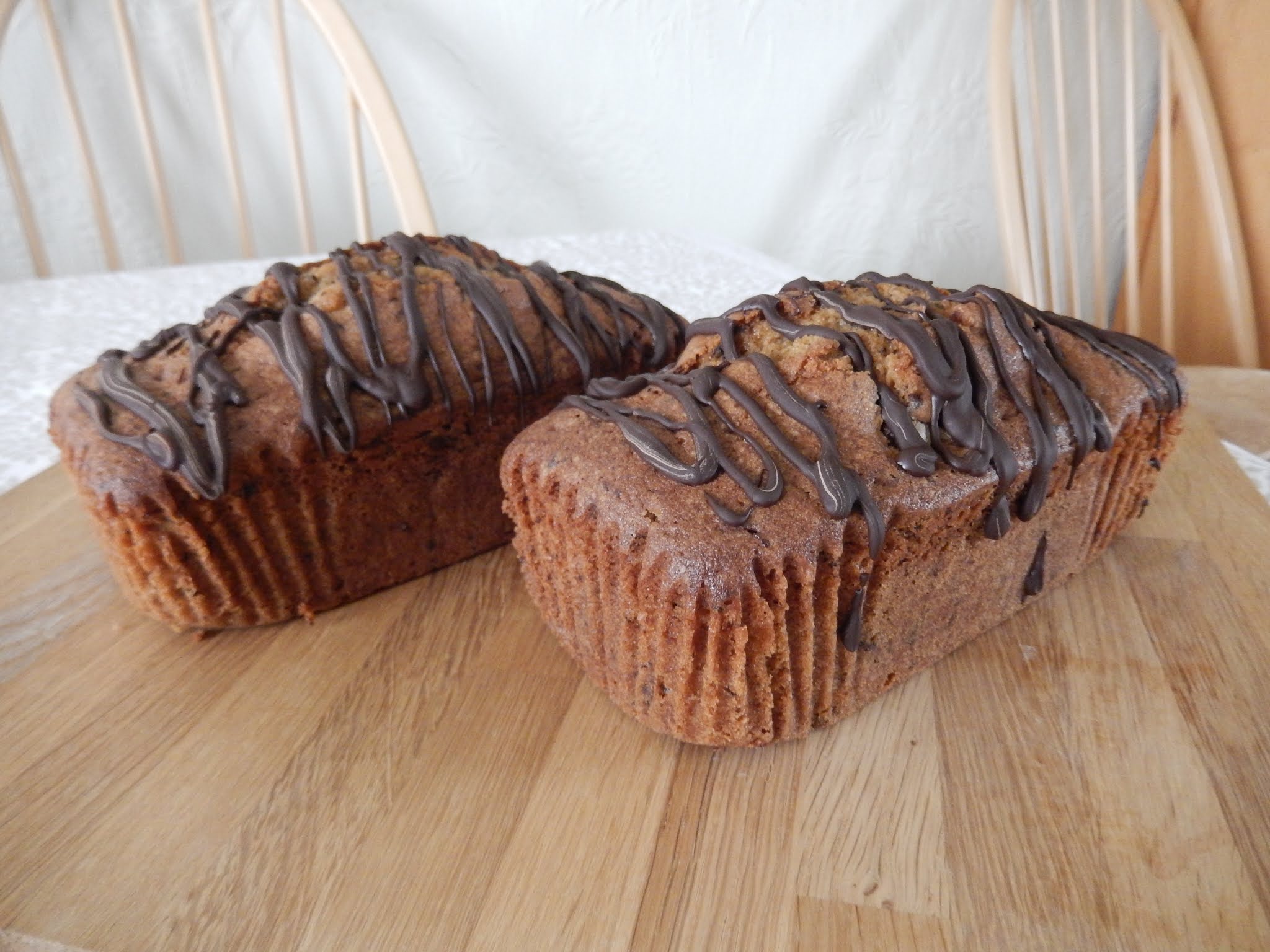
Biscoff Spread and Chocolate Chip Loaves

My second Easter bake, for my son, who would rather eat chocolate than dried fruit, was a variation on this recipe from The Baking Explorer. At the end stage of making the batter, I stirred in 150g of chopped plain (70%) chocolate.

In order to share the cake with him, I decided to bake it in two 1lb loaf tins, and guesstimated that this would reduce the cooking time by 15 minutes, which turned out to be correct!

As I would be wrapping the cake to take it to him, adding a buttercream topping didn't seem a good idea, so I just dribbled some more melted chocolate over the cooled cakes.

As usual, I was disappointed that the Biscoff flavour wasn't stronger, but even though I anticipated this, I decided not to add any extra spices to the cake, as I didn't want the flavour to fight with the chocolate. In the end it was a good balance  between the very subtle spices and chocolate. A little vanilla extract might have been an improvement!

Thursday, 11 February 2016

Brownies with Salted Chocolate Chunks and Caramelised Biscuit Spread Swirl

Choclette, at Tin and Thyme, has set us the task of baking with chocolate and butter in this month's We Should Cocoa challenge. Whilst I've always been a firm believer in baking with butter, I have had occasion to use substitutes - I experimented quite a lot with oils, when my son was still living at home and on a low-saturated fat diet, and I've used Pure sunflower spread and coconut oil for non-dairy baking. I would say that, in general, substituting baking spreads for butter, or using oil in recipes, works very well, especially in sponge-type cakes, where oils, in particular, make very moist cakes.

However, there are, for me, two categories of baked goods where butter cannot be substituted so successfully. One is flapjacks, where you need a hard fat to get final texture right and where butter is much better for flavour once you go down the route of using saturated fat. The second category is brownies, especially if you like dense fudgy brownies, as I do. With growing evidence that butter is healthier than spreads and baking products based on hardened vegetable oils, there's really no reason not to use butter when baking these types of things. In fact, there's a lot of evidence that it is the amount of sugar that we should be worrying about - whether it's refined cane or beet sugar or sugar from more 'natural' sources, such as honey, maple syrup, or fruit molasses.

Anyway - back to brownies! In the past I've tried brownies made with vegetable oil, mayonnaise and puréed fruit and vegetables in an effort to reduce saturated fat levels, and while the results were usually acceptable, these substitutes made brownies that were lighter and cakier than brownies made with butter. Other than butter, coconut oil gives the best result, but that is because it is an oil with high levels of saturated fat, which makes it my choice for non-dairy brownies,

Having decided to make brownies for this buttery challenge, I looked for ways to make my basic recipe more exciting. I had some  Lotus brand Caramelised Biscuit Spread leftover from Christmas, which I thought would make a good addition to brownies, especially if I could swirl it across the top of them. Because this spread is very sweet, I decided to add some salt to the brownies to offset the sweetness a little. I used a bar of sea-salted milk chocolate, chopped into chunks, in the main part of the batter, and sprinkled a little vanilla/sea-salt mixture on top too.

Ingredients
140g plain chocolate - at least 60% cocoa solids (I used 70%)
140g unsalted butter
300g light muscovado sugar
3 large eggs
1 teaspoon vanilla extract
160g plain flour
3 tablespoons cocoa
100g milk chocolate with added sea-salt (I used Green and Black's)
200g caramelised biscuit spread
1/2 teaspoon sea salt flakes*

*I used vanilla sea-salt, made by adding a split vanilla pod to a cup of flaked sea-salt, in a jar, and leaving it for a couple of weeks, shaking occasionally. The vanilla seeds come out into the salt.

Method
Line a shallow 20cm(8") baking tin with parchment and pre-heat oven to 180C.
Melt the chocolate and butter together, in a large mixing bowl, over a pan of simmering water, then remove the bowl from the heat.
Stir in the sugar, until there are no lumps and the mixture is quite smooth.
If the mixture is more than lukewarm at this stage, let it cool a little more, then add the eggs, one at a time, beating well. Add the vanilla extract.
Sift the flour and cocoa into the chocolate mixture and fold in.
Weigh 150g of batter into a small bowl, and stir the chocolate chunks into the larger portion of batter.
Spread the larger amount of batter into the prepared baking tin.
Weigh the biscuit spread into a microwave-proof bowl and heat for 25 seconds on full power to melt. I got the idea of melting the spread from this recipe on the Biscoff site. (This could probably be done in a small pan over a low heat, if a m/wave isn't available.)
Drizzle the melted biscuit spread over the surface of the brownie batter, letting it spread out naturally to cover as much of the surface as possible.
Pour the remaining brownie batter, in three stripes, across the surface of the biscuit spread, then use the end of a spoon to mix the chocolate batter and biscuit spread into swirls, without going too deep into the main brownie mixture. Using a small amount of the brownie batter on top of the biscuit spread layer in this way makes it easier to swirl the two mixtures together.
Sprinkle the sea-salt flakes over the surface, then bake for about 30 minutes until the brownie mixture has set, and a probe comes out with just a few damp crumbs adhering to it. The biscuit spread will crust over but still be liquid at this point, so don't confuse that with wet batter!
Leave until completely cold before cutting into pieces - the biscuit spread stays liquid for a surprisingly long time!

These brownies were delicious! The salted chocolate chunks, and the small amount of salt sprinkled over the top of the brownies was just enough to subdue the sweetness of the biscuit spread, without the brownies becoming overwhelmingly salty. The biscuit spread itself, as it was in such a thin layer,  was delicately flavoured with cinnamon and caramel, adding just a hint of extra flavour to the brownies. This variation on my basic brownie recipe is definitely something worth repeating!
Sunday, 27 December 2015

Gingerbread Cake with Caramel Biscuit Frosting

This was another recipe from the Christmas 2015 (November) issue of Good Food magazine. I wanted a cake which looked good as a centre piece on the Christmas dining table, as well as tasting good. This Gingerbread Cake with Caramel Biscuit Icing certainly looked good on the cover of the magazine, but it was far too big for my needs and the decoration was too elaborate and twee for a group of four adults. Fortunately the recipe was easy to split into thirds, so I made two layers of cake instead of three, and decorated it much more simply, using fondant snowflakes, ginger crunch pieces and gold glitter and just half the quantity of frosting from the recipe.

I was really pleased with the flavour of both the cake and the cream cheese frosting, which used Lotus  caramel biscuit spread to give it a delicate flavour of caramel and cinnamon. The cake had quite a mild  ginger flavour, but anything stronger would have overwhelmed the flavour of the frosting. What didn't turn out so well was the texture of the cake. It was dense and solid, rather than sponge-like, and didn't really rise at all. It was as if the baking powder hadn't worked, although once I realised what the cake was like, I went back and tested it, and it worked OK. I'm sure I remembered put it in (!!??).

Unfortunately I didn't realise how bad the texture of the cake was until it was cut after being decorated. Had I realised earlier I'd have started again and made another cake. It wasn't inedible, but it wasn't what I'd expected, and rather spoiled the overall eating experience, despite the good flavours. I'd definitely use the frosting recipe again - I can think of many cakes which would be enhanced by it.


Monday, 17 August 2015

Chocolate, Peanut and Biscuit Spread Cookie Bars

These cookie bars were made for the blog challenge, Formula 1 Foods, run by Caroline at Caroline Makes. The idea is to cook a dish inspired by the country where each round of the F1 Grand Prix races take place. For some  races I have found traditional recipes from the country in question, and for others I have used ingredients particularly associated with that country. The next race takes place in Belgium, which has a reputation for great patisserie similar to that of France, as well as a few traditional pastries of it's own, such as waffles, rice tart, a meringue confection known as a Merveilleux, and a curd pie called a mattentaarte. And then there's the chocolate, of course - the Belgians have a long tradition of producing superb quality chocolates!

Unfortunately, none of the traditional recipes fitted in with the sort of baking I wanted to do, both in terms of time and what would get eaten, so I decided to take inspiration from two Belgian foodstuffs - chocolate and Speculoos biscuits (in the form of Lotus caramelised biscuit spread). The recipe I chose was loosely based on this one from Sally's Baking Addiction, but underwent quite a few changes, both to introduce lots of dark chocolate and to adapt to things I didn't have in the storecupboard.

I was quite perturbed to find out, despite my guesstimate of how much was left in the jar, that I didn't have enough biscuit spread (or cookie butter, as it's known in the USA), but decided to replace it with peanut butter as in the past I'd made a similar traybake using biscuit spread as a straight substitute for peanut butter. Once that decision was made, it seemed a good idea to add some chopped roast peanuts instead of some of the chocolate, to emphasise the peanut part of the recipe. I added a little ground cinnamon to strengthen the flavour of the biscuit spread, used plain wholemeal flour instead of white and two whole eggs instead of 1 egg and an extra yolk. The chocolate that was taken out of the cookie dough was used as a topping.

Ingredients
125g plain wholemeal flour
1/2 teaspoon baking powder
1/8 teaspoon bicarbonate of soda
pinch salt
1/2 teaspoon ground cinnamon
75g unsalted butter, melted
200g light muscovado sugar
2 medium eggs
1 teaspoon vanilla extract
130g biscuit spread
70g smooth peanut butter
100g coarsely chopped plain chocolate
50g unsalted roasted peanuts, chopped

Topping - 100g finely chopped plain chocolate

Method
Pre-heat the oven to 180C, line a 20 x 20cm (8 x 8") square baking tin with baking parchment.
Mix the salt, cinnamon and raising agents with the flour. Mix the sugar and melted butter in a large bowl, then beat in the eggs, vanilla, biscuit spread and peanut butter. Fold in the flour mix, then the chopped chocolate and nuts. Transfer the mixture to the lined baking tin and spread evenly. Bake for 30 minutes or until a probe comes out with only a few damp crumbs clinging to it. Turn off the oven, sprinkle the chocolate for the topping over the baked dough, as evenly as possible and return to the cooling oven for 5 minutes. Remove the tray from the oven and spread the melted chocolate with a spatula.
Cool completely in the baking tin before removing and cutting into bars or squares.

I didn't think this bake was entirely successful. The dough puffed up during cooking, then sank on cooling, leaving a high rim around the edges and making it difficult to spread the chocolate evenly. I checked my previous recipe using Lotus biscuit spread and noticed that it was quite similar in quantities of ingredients but didn't add any raising agents, which would have prevented the dough puffing up during baking, and kept a more level top. A slightly more firmer cookie would have also given a better texture - this was a little fragile. However, the flavour combination of plain chocolate and peanuts with the caramel and spice notes of the biscuit spread was excellent.

The other minor problem, which affected the appearance rather than the flavour, was that I covered the bars before photographing them, and the next day the chocolate topping had funny little circles on it. I suspect this was due to condensation, even though I thought the bars were completely cold before covering them.

Although these cookie bars weren't perfect, I think they made good use of two traditional Belgian foods - and would probably be enjoyed by any chocolate loving Belgian!

Saturday, 2 August 2014

Caramel Chocolate Chip Bars

using Lotus Caramelised Biscuit Spread

Lotus brand Caramelised Biscuit Spread (also known as Biscoff spread) has been available for a few years now, but for some reason sales have suddenly surged in the UK. It could be because some reviews describe it as 'crack in a jar' as it's apparently so addictive - if you've ever eaten Nutella or peanut butter by the spoonful in a darkened kitchen, you'll know that feeling! It's basically Lotus brand caramelised biscuits which have been made into a spread with the addition of more oil and sugar. The biscuits themselves are a mass market version of speculoos, and are lightly flavoured with cinnamon.

When I saw the spread on special offer at the supermarket, I thought it was time to do a little research and find out what the fuss was about. I found, to my surprise, that there is a limit to the amount of sweetness I will tolerate - I liked the cinnamon flavour but there's no way I could eat this as a spread on toast or in sandwiches, as suggested. It's described as an alternative to peanut butter or Nutella, but a quick look at the ingredients shows it has even less claim to any form of nutrition than those products. Do you really need a biscuit sandwich for breakfast?

Anyway, to avoid wasting the jar, I looked for recipes to use it up. What I soon realised was that it could be used as a direct substitute for peanut butter in any recipe,  so I decided to try it in my favourite peanut butter recipe - Chocolate Peanut Buddy Bars. I reduced all the quantities to 2/3, to bake in an 8" square tin, and reduced the sugar even more to allow for the sugar in the biscuit spread. I also used plain chocolate, to counteract the amount of sugar in the cake batter.

So, the ingredients were: 160g caramelised biscuit spread, 60g softened butter, 175g caster sugar, 2 large eggs, a teaspoon of vanilla extract, 90g plain flour, a pinch of salt and 250g plain chocolate, roughly chopped and divided in half (half for the batter and half for the topping). I followed the method described in the recipe link.

The bars had a lovely texture - somewhere between a cake and a cookie - and a subtle caramel flavour. However, the cinnamon flavour noticeable in the biscuit spread had been diluted too far - I would recommend adding half a teaspoon of cinnamon to the cake batter, to get back to the flavour of the spread.

These are still packed with calories, but if you cut into small enough bars, and exercise some restraint, I don't think you'll come to too much harm - they're certainly not addictive!